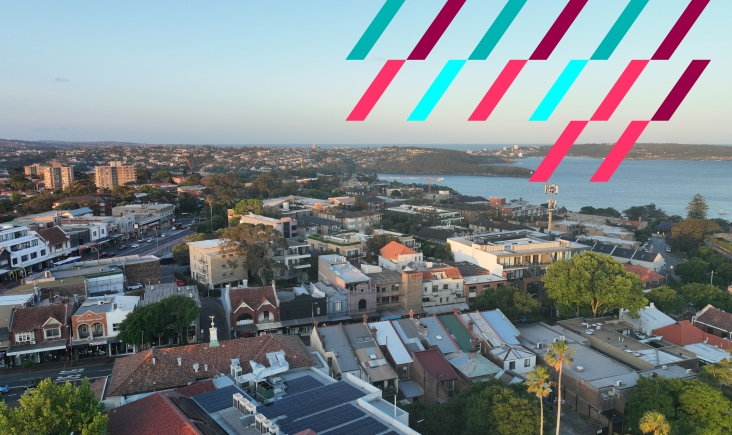
Blue Street Plaza at Centre of North Sydney Tower Concerns

An open-air plaza beside North Sydney Station has become a focus of community concerns over plans to convert the adjoining commercial building at 5 Blue Street into 148 dwellings.


Zurich Australian Insurance Properties is seeking approval for a 14-storey mixed-use development containing 62 apartments, 86 affordable co-living units and ground-floor retail. The proposal would reuse parts of the existing building and refurbish Blue Street Plaza, although changes to the surrounding public space and planning controls have drawn scrutiny.

The Plaza Residents Want Protected

McMahons Point resident Shaun Sullivan expressed general support for converting the commercial building but questioned plans for new residential floors to extend over part of the open-air plaza. Sullivan raised concerns that the proposed building overhang could reduce the amenity and harbour outlook available from the public space, even if the plaza remained accessible.

Lavender Bay resident Katharine Loewenthal also supported adapting the existing building rather than replacing it with a substantially taller development. However, Loewenthal questioned proposed changes to planning height controls affecting Blue Street Plaza, arguing that the need for additional development potential over an area intended to remain publicly accessible had not been adequately explained.
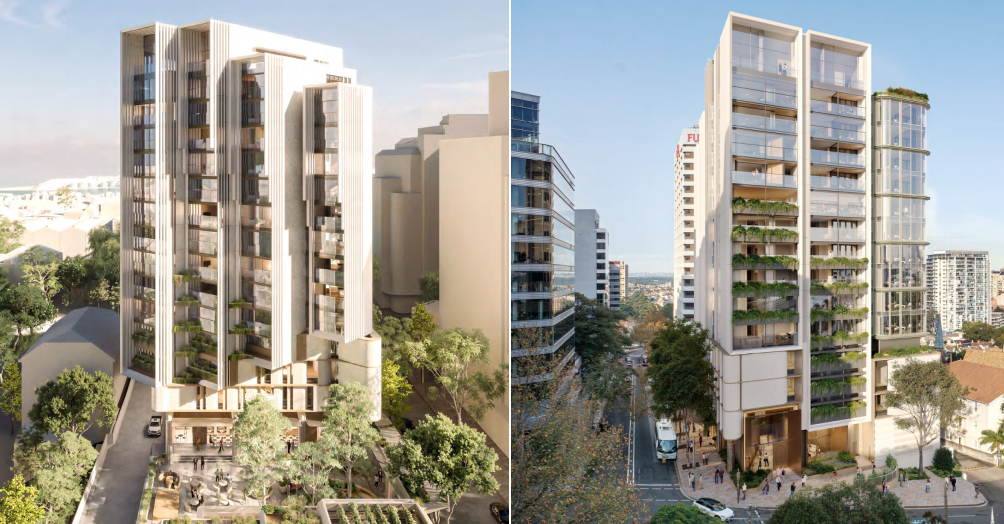
North Sydney tower
Photo Credit: NSW Gov

The architectural plans include landscaped areas, seating, pedestrian shelters and potential public artwork around the plaza. Ground-floor retail would face the open space, with pedestrian connections linking Blue Street, Greenwood Plaza and North Sydney Station.

Concerns about the broader neighbourhood have also featured in submissions. Lavender Bay resident Julia Gibson questioned whether surrounding roads, parking areas, schools and hospitals could accommodate further residential development. Gibson also raised concerns about the combined effects of several proposed developments near the suburb’s low-rise heritage conservation area.

Support For Housing, With Conditions

Not all submissions opposed the redevelopment. Lavender Bay resident Neil Grummitt supported converting the existing commercial building, citing its proximity to public transport and the inclusion of affordable accommodation. Grummitt nevertheless questioned the proposed height controls over the plaza and sought clarification about parking allocated to the co-living units.

Nearby View Sydney hotel, at 17 Blue Street, also indicated it did not oppose the project in principle. Its submission requested safeguards to limit construction noise, vibration and dust, while protecting vehicle access and hotel operations during building works. The accommodation proposed by Zurich would include 12 one-bedroom apartments, 19 two-bedroom apartments, 29 three-bedroom apartments and two larger penthouses.
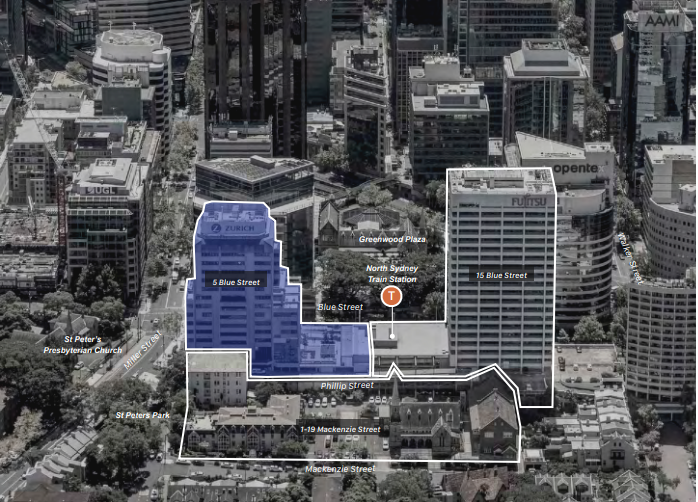
Blue Street Plaza
Photo Credit: NSW Gov

Affordable co-living units would occupy Levels 1 to 3, with the development documents proposing permanent management as affordable housing by a community housing provider. Individual units would contain private bathrooms and kitchenettes, supported by shared living, kitchen and study facilities.


Basement parking and vehicle servicing would be accessed from the rear of the building through Blues Point Road, separating those movements from the main pedestrian frontage. The application was publicly exhibited between 16 July and 13 August 2026. North Sydney Council is also recorded as an objector on the NSW Planning Portal. The proposed redevelopment, listed as State Significant Development application SSD-86270706, remains in the response to submissions stage and has not been approved.

Published 10-October-2026

Iconic Spaceship House Soars $1 Million Above Guide in Pre-Auction Sale

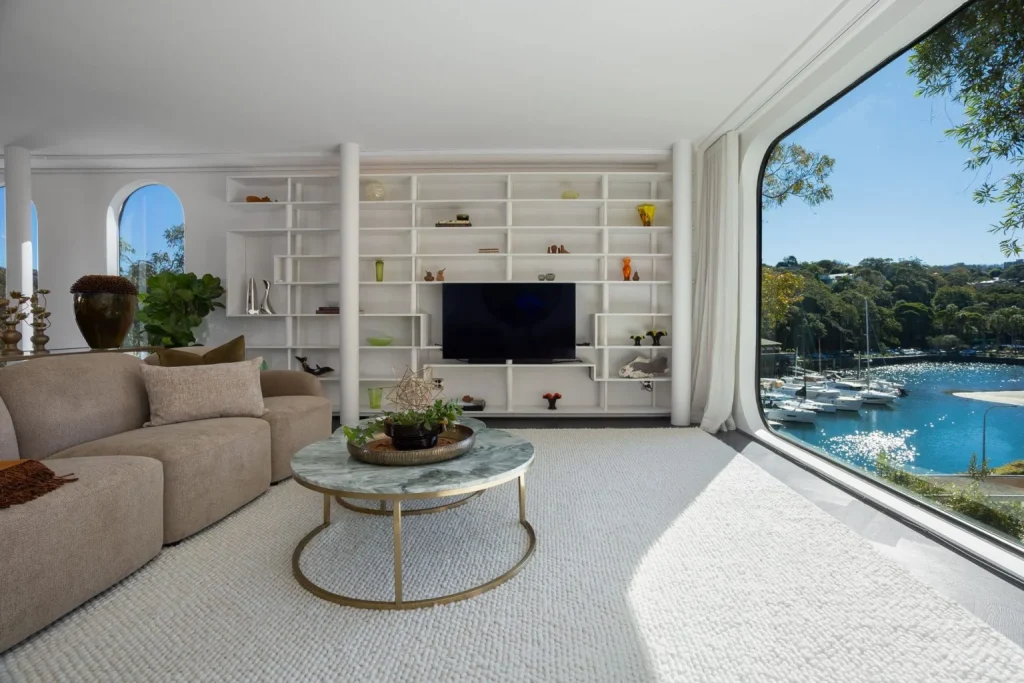
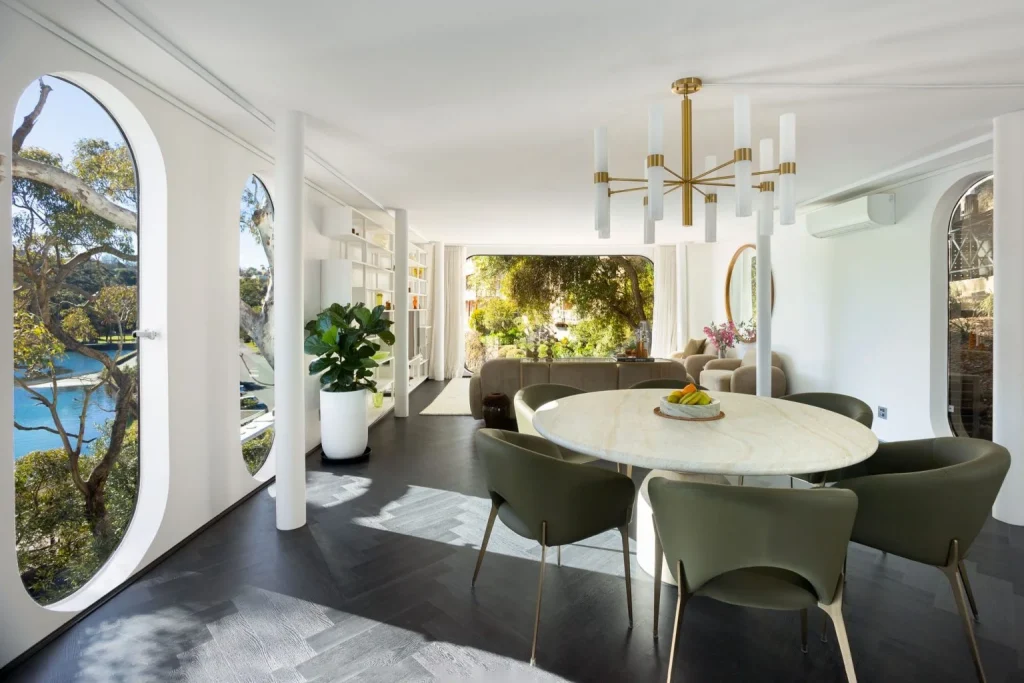
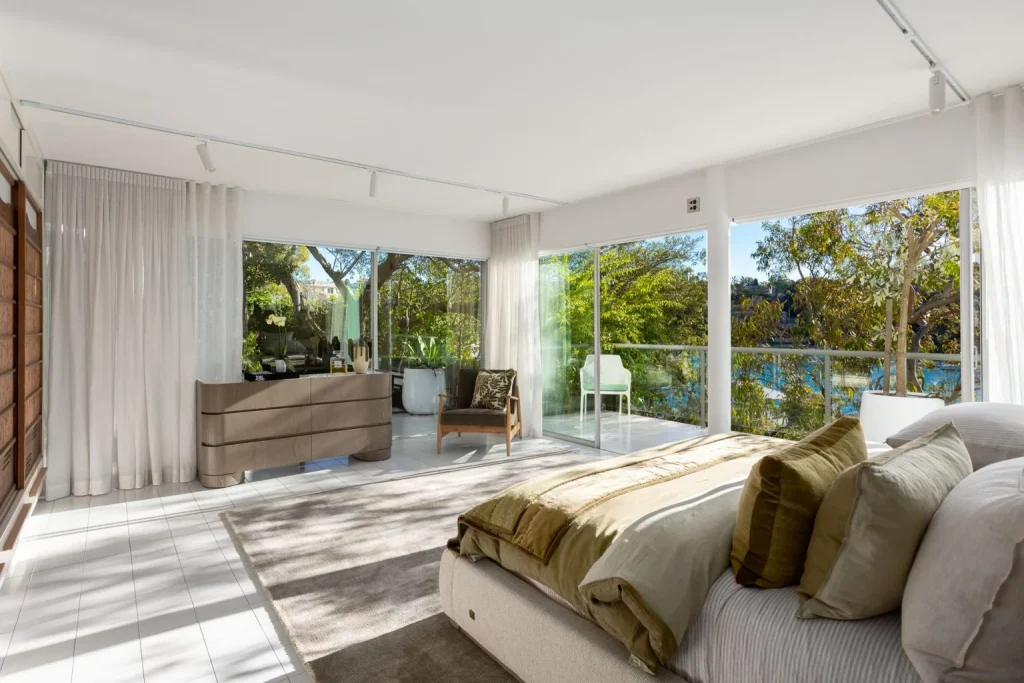
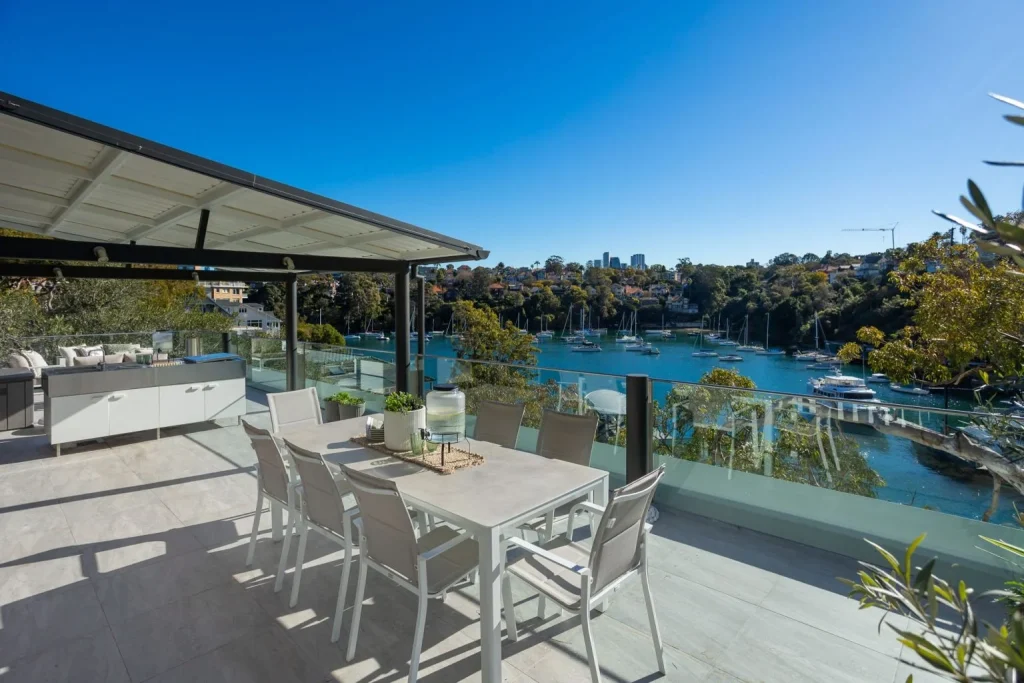
One of Mosman’s most talked-about addresses has found a new owner, with the Spaceship House selling for $6 million — a full million dollars above its asking price — and well before its scheduled auction date. The sale of 2B Mosman Street, known locally as the Spaceship House for the way it appears to hover dramatically above Mosman Bay, has drawn attention not just for its striking result, but for the extraordinary level of buyer interest the one-of-a-kind home attracted.


Photo Credit: De Brennan Property

The property — formally known as the Collins House — had been listed with a $5 million guide and was due to go under the hammer on Friday, 18 September. It sold nine days early.

David Grant of De Brennan Property said interest in the home was strong from the outset, with 112 inspections, 13 contracts issued, and three serious parties ultimately competing for the keys. The buyers are believed to be a Sydney family.

Photo Credit: De Brennan Property

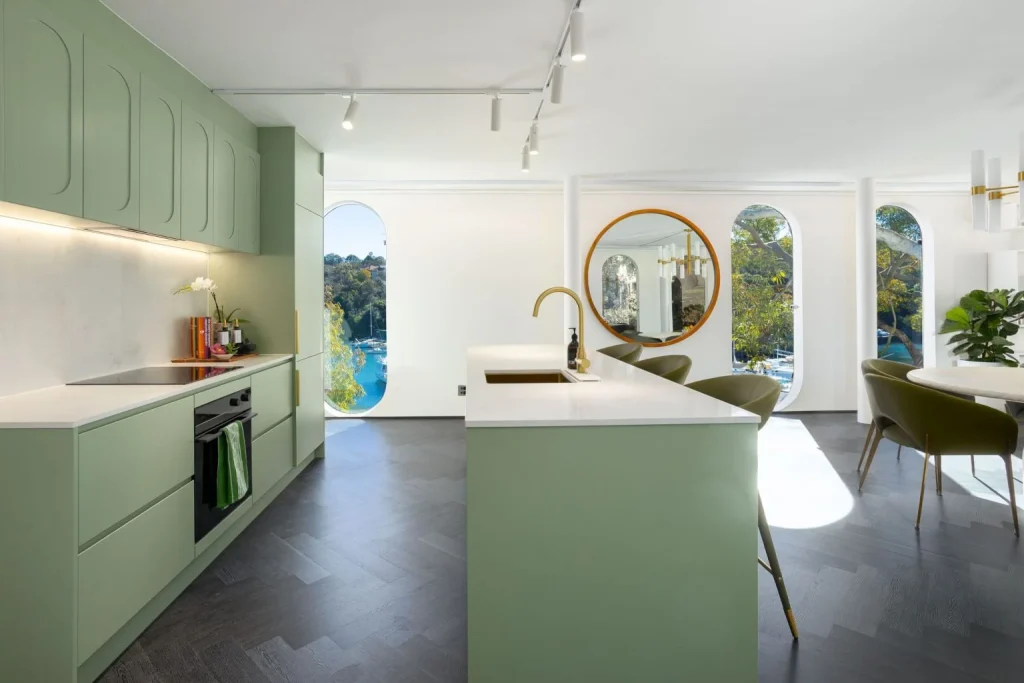
It is not hard to understand why. The three-bedroom home with its distinctive fibreglass facade and showstopper rooftop terrace occupies a position that few properties in Sydney can match, with sweeping views over Mosman Bay and an architectural pedigree that has placed it in magazines and architectural lectures across the country. The Architecture Foundation Australia has recognised it as one of the 30 most important Australian houses of the past 60 years — a distinction that speaks to its rarity as a genuine intersection of architecture, place, and lifestyle.

Photo Credit: De Brennan Property

Grant noted that buyers were drawn from across Sydney by the views and the quality of the renovation, and that while buyer demand is currently strong, low stock levels mean that many are holding out specifically for the right property — when it arrives, competition can be fierce.

Photo Credit: De Brennan Property

The Collins House was built in the late 1970s by architect owners Ian and Roseanne Collins, the parents of Penny Collins, co-founder of the acclaimed Sydney practice Collins and Turner, a multidisciplinary design studio founded in 2002 by Penny Collins and Huw Turner. The home was constructed using dry-jointed, prefabricated fibreglass wall panels and features elliptical windows framing water and bushland views, with underfloor heating and a passive cooling system using ponded water on the concrete roof. The iconic home appeared in Belle magazine as far back as 1978 and has remained a reference point in architectural circles ever since.

Photo Credit: De Brennan Property

The home last changed hands in 2016 for $3.7 million, when it was purchased by Gillian Adams, founder of Gillian Adams Salon, Spa and Dining. The decade since has seen the property undergo the high-end renovation that Grant says proved so compelling to buyers.


The $6 million result represents a striking turnaround for a suburb where quality stock remains tightly held — and a fitting chapter in the story of a house that has, for nearly five decades, refused to go unnoticed.

Published 11-September-2026

Long-Held Mosman Home Returns After Major Renovation

A long-held Mosman home at 2A Cross Street has returned to the market after a complete renovation, marking another chapter for a property that remained under the same ownership for about three decades.


A New Chapter for the Mosman Home

The five-bedroom property had been owned by the late Andrew Turnbull for about 30 years before it sold last year to Bant Investments for $8.1 million. It had initially come to market with expectations of $10 million.

Records cited for the property show Turnbull bought the double-brick home for $2 million in July 1995.

Since the sale, the residence has been extensively reworked while retaining its large-scale layout. It now contains five bedrooms, five bathrooms and parking for four cars, with about 472sqm of floor space spread across three levels on a 771sqm block.

Mosman home
Photo Credit: Atlas

The renovation extended throughout the home, including its kitchen, bedrooms, bathrooms and living areas. The layout includes three living spaces, an office or study and a separate studio apartment with external access.

A gym, spa and infrared sauna have also been incorporated, while the garage has been upgraded with an epoxy resin floor.

Cross Street Setting Remains Central

The property sits on Cross Street, close to shops and an oval, while its boundary adjoins Sydney Harbour National Park.

Its elevated position provides views across the harbour towards the city and ocean. The house also includes balconies and a limestone courtyard, with a full-width balcony overlooking the surrounding outlook.

Mosman property
Photo Credit: Atlas

Access is provided by a 60-metre cobblestone driveway with remote gates. Security cameras, an intercom and an alarm system are also included in the current listing.

The location and scale of the property remain key parts of its character despite the extensive internal changes.

home renovation
Photo Credit: Atlas

Property Returns to the Local Market

Atlas founding director Michael Coombs is handling the sale alongside residential sales agent Dan Meakins.

Coombs reported a high level of inquiry within the first 24 hours of the property being launched. Across properties he is handling, first-day inquiry had risen from an average of about 11 or 12 six months earlier to about 30 to 32.

residential sales
Photo Credit: Atlas

No specific first-day inquiry total was given for 2A Cross Street.

The property has been reported with a $16.5 million price tag, although the Atlas listing does not publish a numerical price guide and instead directs buyers to contact the agency.


Turnbull, who previously owned the Mosman home, had served as chairman of Mt Isa Mines, chief executive of Burns Philp and a senior executive at GEC Australia, and held numerous board positions during the 1980s.

Published 9-September-2026

Balmoral Shark Listening Station Brings Real-Time Alerts To Harbour Users

Balmoral swimmers and other harbour users can now receive real-time SharkSmart alerts when tagged white, tiger or bull sharks are detected nearby, after one of Sydney Harbour’s first two shark listening stations was installed near Balmoral in Middle Harbour.


Balmoral Shark Listening Station Adds Local Alerts

The Balmoral shark listening station sends an alert through the SharkSmart app when a tagged target shark passes within approximately 500 metres. SharkSmart also distributes tagged-shark detections through X.

White, tiger and bull sharks are the target species covered by the listening-station program. The alert system is specifically based on detections of tagged sharks within the station’s range.

shark monitoring
Photo Credit: NSW SharkSmart/Instagram

A second harbour station has been installed at Lady Bay in the harbour’s east. Together, the Balmoral and Lady Bay installations are the first two Tagged Shark Listening Stations placed in Sydney Harbour.

The pair can provide information about tagged sharks moving into and out of the harbour. The program also includes research into bull shark movements and behaviour in Sydney Harbour and other estuaries.

Balmoral shark listening station
Photo Credit: NSW SharkSmart/Instagram

Balmoral Buoy To Remain In Place

The buoy near Balmoral is visible from the shoreline and is intended to remain in place permanently. Its detections provide swimmers and other harbour users with additional information about tagged target sharks moving nearby.

The harbour installations expand an existing network of 37 tagged shark listening stations at ocean beaches across NSW. That coastal network stretches from Kingscliff to Merimbula, with at least one station in every coastal local government area.

NSW SharkSmart
Photo Credit: NSW SharkSmart

The existing stations are tracking 1,698 white sharks, 938 tiger sharks and 374 bull sharks. Adding the two Sydney Harbour stations brings the statewide listening-station network to 39.

Part Of The Wider Shark Management Program

The listening stations form part of the NSW Shark Management Program, which also includes 305 SMART drumlines across 19 local government areas and 51 shark nets between Newcastle and Wollongong from 1 September 2026 to 31 March 2027.

Drone surveillance is another part of the program, with 73 drones operating across 97 beaches as expanded monitoring is rolled out.

Research under the program covers white, tiger and bull sharks, along with artificial intelligence, drone automation, personal and area-based shark deterrents and bite-resistant materials.


The program states that shark risk cannot be eliminated entirely. The Balmoral shark listening station adds real-time tagged-shark information through the SharkSmart app when a target shark is detected within approximately 500 metres.

Published 2-Septemberr-2026

Discover the Healing Power of Japanese Superfoods at New Mosman Cooking Workshops

Did you know that certain ingredients routinely sold as remedies in Japanese chemists have quietly formed the cornerstone of local longevity for centuries? Residents looking to transform their physical wellbeing can now step into an immersive culinary workshop right around the corner in Mosman, where ancient superfoods take centre stage.


Bridging Professional Experience and Plant-Based Philosophy

Japanese
Photo Credit: Eventbrite

The local culinary movement is seeing a shift toward holistic nutrition, shaped largely by the extensive background of Sydney-based instructor and health coach Yoshiko Takeuchi. Having spent more than a decade refining her skills in high-profile commercial kitchens—including a tenure alongside world-renowned figures at Tetsuya’s—Chef Yoshiko eventually shifted her professional focus toward plant-based, vegan, and gluten-free wellbeing. 

With over twenty years of teaching experience split between Australia and Japan, her approach has reached broad audiences through media features on programs like Studio 10 and The Biggest Loser. Alongside operating her specialized Sydney cooking school, she has authored multiple resource guides, including Japanese Superfoods and Healthy Soy Cooking, aimed at making ancient wellness practices accessible to everyday home cooks.

The Healing Properties of Traditional Ingredients

Japanese
Photo Credit: Eventbrite

Modern diets often leave individuals questioning whether daily meals actively support vitality or deplete it. Traditional Japanese cooking places heavy emphasis on functional, nutrient-rich staples—such as mineral-heavy seaweeds, konnyaku, fermented amazake, and premium matcha—designed to promote energy, skin clarity, and immune resilience without compromising on flavour. 

Historical practices treated these specific items as functional remedies, a philosophy reflected in contemporary workshops that highlight ingredients like shiitake mushrooms for immune support and kuzu for natural digestive balance. By stripping away animal fats and processed elements, these whole-food methods demonstrate that plant-forward eating can remain deeply satisfying while encouraging natural bodily cleansing and gut health.

Interactive Culinary Learning in the Neighbourhood

Japanese
Photo Credit: Eventbrite

Residents stepping into the interactive workshop environment can anticipate an immersive look at practical, plant-based techniques that translate effortlessly to domestic kitchens. Rather than relying strictly on passive observation, the curriculum pairs detailed culinary demonstrations with active practice, covering everything from soothing kuzu-apple mixtures and healing dashi broths to cauliflower-based dishes and nutrient-dense amazake puddings. 

Because the sessions operate on a whole-food, MSG-free model with all clean-up managed behind the scenes, participants are free to focus squarely on tasting, learning, and enjoying freshly brewed organic tea. It serves as an invitation for community members to rethink their everyday cooking habits, armed with take-home recipes designed to impress family and friends.


Workshops take place regularly at 83 Spofforth Street, Mosman NSW 2088 (opposite the Cremorne cinema), with standard sessions typically scheduled at 10:00 am or 2:00 pm. Booking is essential, and standard reservations are non-refundable though transferable with more than thirty days’ notice.

Published Date 27-August-2026

Raglan Street and Muston Street Housing Proposal Enters NSW State Significant Pathway

A Mosman housing proposal spanning nine properties across Raglan and Muston streets has been declared State Significant Development following a recommendation from the Housing Delivery Authority (HDA).


The proposal covers 145A and 147 Raglan Street and 15, 17, 19, 21, 23, 25 and 27 Muston Street. HDA project information describes an eight-storey residential flat building with about 110 dwellings, including an affordable housing component. 

Affordable housing would account for 15 per cent of the dwellings, with 5 per cent proposed in perpetuity and another 10 per cent for 15 years. The proposal is recorded as EOI 374244 in the NSW Government’s HDA register, where it is listed as recommended by the authority and declared State Significant Development by the Minister.

Photo Credit: Urban Digest

The signed ministerial order also identifies the Raglan Street and Muston Street land among the latest developments formally declared State Significant. The declaration enables the proposal to enter the state assessment pathway but does not constitute development approval.

Nine properties form proposed eight-storey site

The development footprint combines two Raglan Street properties with seven consecutive addresses along Muston Street. Publicly available HDA information gives an indicative yield of about 110 dwellings but does not establish a final apartment mix, parking provision or detailed architectural design.

The project was among 10 proposals recommended for State Significant Development declaration following the HDA’s August 18 meeting. The authority considered 36 housing proposals at the meeting, with 10 ultimately recommended for the HDA pathway. 

More detailed environmental and design documentation would be required as the development progresses through the State Significant Development process.

Separate Muston Street project draws hundreds of submissions

The new proposal emerges while another State Significant Development is being assessed at 65 Muston Street, further along the same street.

The separate application, SSD-98068713, proposes a residential flat building with in-fill affordable housing and is currently listed at the Assessment stage on the NSW Planning Portal. The portal describes the project as including four affordable apartments and records more than 300 submissions.

Photo Credit: SSD-98068713

Published objections to the 65 Muston Street project raise issues including building height and bulk, traffic, excavation, neighbourhood character, views and the affordable housing component. Those submissions relate to the separate 65 Muston Street application and are not submissions on the newly declared Raglan Street and Muston Street proposal.

Detailed assessment and exhibition still ahead

EOI 374244 is at an earlier planning stage than the separate 65 Muston Street application. State Significant Development declaration gives the nine-property proposal access to the NSW assessment pathway used for projects recommended by the Housing Delivery Authority.


A State Significant Development application would still need to be prepared, publicly exhibited and assessed before a determination could be made. The NSW Government’s HDA register currently records the project as declared SSD by the Minister under the HDA pathway, rather than as an approved development.

Published 25-Aug-2026

Meet the Artists Behind the 2026 Mosman Art Prize

The 2026 Mosman Art Prize artist talks are giving art lovers something a little different this year — a chance to pull up a chair, pour a glass of wine, and hear directly from the painters themselves about what drives their work.


Mosman Art Gallery is hosting two evening sessions of short artist presentations, with five exhibiting artists taking to the floor at each event. Each talk runs between 10 and 15 minutes, keeping things brisk and conversational rather than lecture-like — the kind of format that tends to spark real discussion. The sessions are supported by Colormaker Industries.

The first evening takes place on Wednesday 26 August, featuring artists Ham Darroch, Tina Havelock Stevens, Archy Obradovic, Nicola Smith, and Morgan Stokes. A second session follows on Wednesday 7 October, with Robby Bennett, George Goodnow, Hayley Megan French, Elizabeth Pulie, and Yuanzhou Zheng presenting their work.

It’s the kind of event that rewards curiosity. Visitors to the gallery may admire a painting on the wall without knowing the hours of uncertainty, revision, or personal history behind it. An evening like this changes that. Hearing an artist describe the exact moment a work clicked — or didn’t — tends to shift how you see it entirely.

The Mosman Art Prize, established in 1947, is considered one of Australia’s oldest and most prestigious local government art awards, with its primary purpose being to build a municipal art collection and encourage an interest in the arts in the local community. The prize is a national acquisitive award of $70,000, funded by Mosman Council.


The artist talks are free to attend and held at Mosman Art Gallery, 1 Art Gallery Way, Mosman. For more information, contact the gallery on 02 9978 4178.

Published 23-August-2026

The Interceptors Bring Countdown Classics to Mosman for Parkinson’s Fundraiser

Mosman is set to host a night of classic Australian rock this August, with The Interceptors bringing their Countdown show to The Mosman Club for the 3rd Annual Jane Hanks Memorial Fundraiser. It is a local event with a clear purpose: to raise funds for Parkinson’s disease research at Neuroscience Research Australia, or NeuRA.


For anyone with even a passing affection for the old Countdown days, this should be an easy sell. The night brings together the music of a memorable era, a familiar local venue and a fundraiser supporting a cause that touches many families in the community.

Les Gock and the Countdown years

Fronting The Interceptors is Les Gock, the HUSH guitarist who appeared in the very first episode of Countdown back in 1974. That connection alone gives the show a certain weight. Gock and HUSH were part of the early Australian rock landscape, and this concert is billed as a tribute to the bands and songs that helped define that time.

Photo Credit: The Interceptors – Les Gock

The setlist promises a run through some of the biggest names of the era, including The Sweet, Queen, The Angels, AC/DC, Michael Jackson and Skyhooks. The band describes itself as a raw, old-school rock ’n’ roll and blues outfit, playing classic songs of the legends, and that is very much the spirit of the event.

Gock has said the fundraiser is “a wonderful night out for a cause that touches so many local families” and added that the community would be welcome. It is a simple message, but an apt one.

A fundraiser with local appeal

The event is designed as a relaxed, seated evening close to home. Doors open at 7pm and the band is expected on stage around 8pm. Tickets are priced at $39.95 plus booking fee, with reserved tables of eight available for groups. Capacity is limited to 200 seats, so those hoping to go would be wise not to leave it too late.

Photo Credit: NeuRA

The proceeds will support Parkinson’s disease research at NeuRA, with the fundraising tied to the Jane Hanks Memorial event. For a night built around music, that gives the whole occasion a serious and worthwhile edge.

There is something very Mosman about this kind of event: a strong local turnout, a respected venue and a room full of people willing to do a little good while enjoying themselves. The rock ’n’ roll will provide the soundtrack, but the real note of importance is the research it helps support.


Bookings are open now through the event’s Humanitix page.

Published 6-August-2026

Should Military Road Take the Growth? Mosman Weighs Its Future

Mosman is facing its biggest housing decision in decades, and the question dividing residents is not whether new homes should be built, but which streets should absorb them.


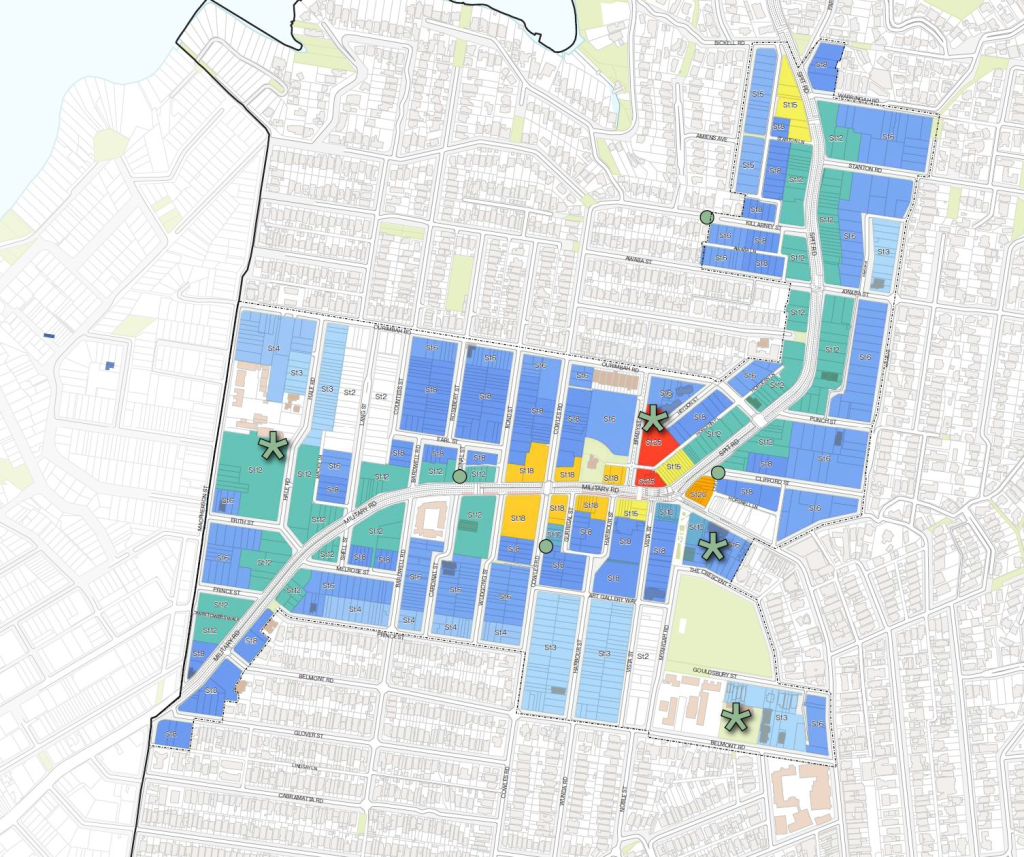
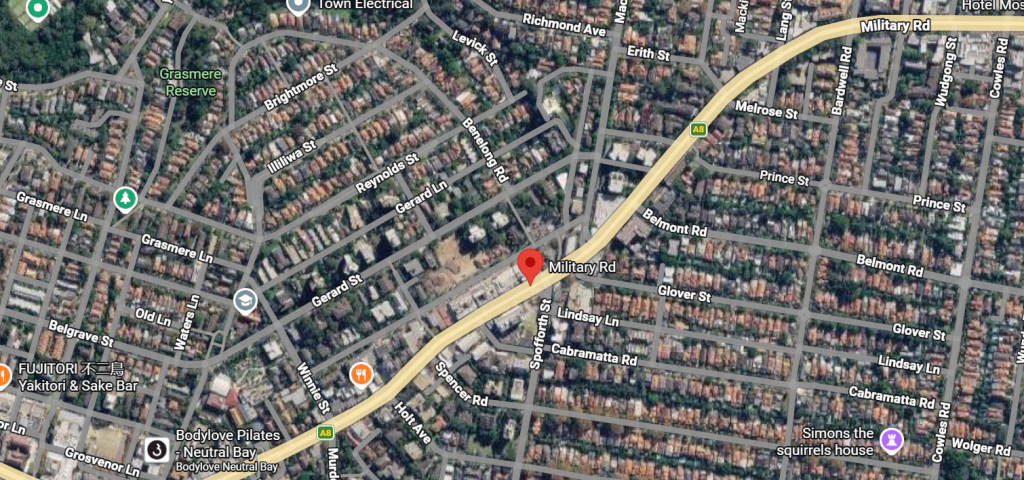
The local housing strategy, developed over months of community consultation, concentrates future property development along the Military Road corridor to shield harbor slopes, Balmoral, Mosman Bay, and heritage conservation streets from the generic six-story apartment heights allowed under statewide zoning rules. 

The NSW planning changes 

Sydney is in the grip of a housing shortage, and in response, NSW introduced the Low and Mid-Rise Housing Policy to allow apartment buildings of up to six storeys within 800 metres of designated town centres and transport hubs. Much of Mosman falls inside those catchment areas.

Mosman housing aerial view
Photo Credit: zetter/iStock

Developers noticed immediately. More than 600 dwellings have already been proposed across the suburb under the current rules — and that number will keep climbing while the statewide policy remains in place.

A different vision for new housing 

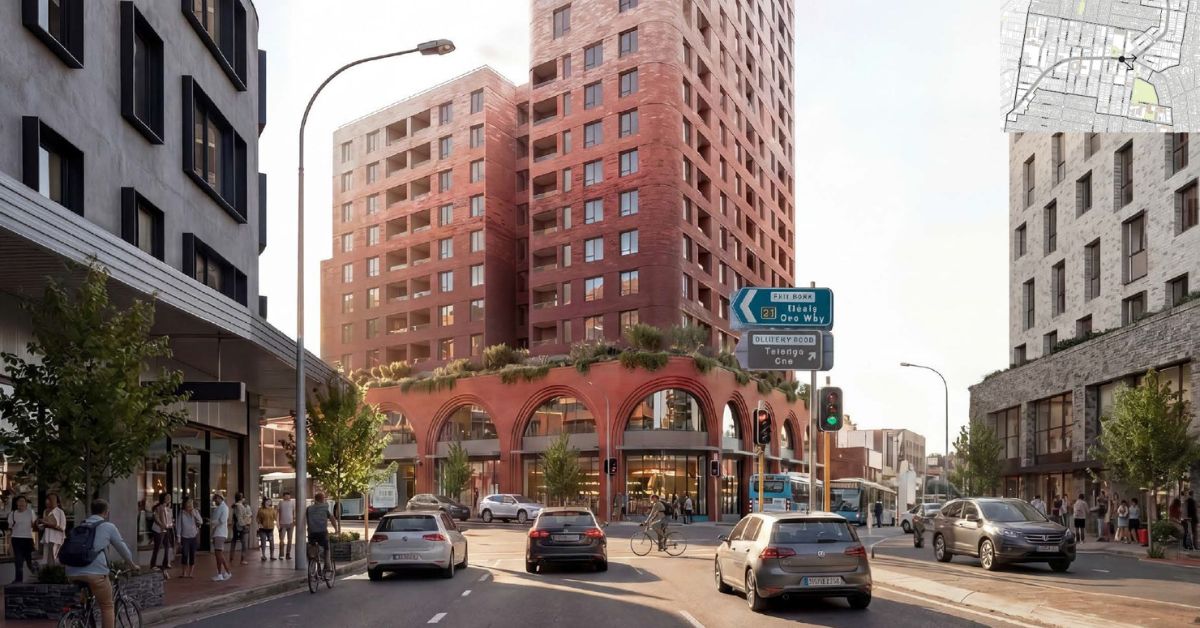
Rather than spreading six-storey buildings across established residential streets, the masterplan would channel most new housing along Military and Spit Roads, rezoned at a largely continuous 12 storeys, rising to 25 storeys at selected sites.

The Balmoral escarpment, Mosman Bay, heritage conservation areas and the harbour-facing slopes would be shielded from that growth entirely.

Housing plan
Photo Credit: Beam Planning/LinkedIn

The plan would deliver roughly the same number of homes as the statewide rules — around 4,700 — but in a concentrated corridor rather than scattered through the suburb’s backstreets and hillsides.

Planners are pursuing the formal state planning pathway to advance this local strategy as a legally recognized alternative to the default rules.

A community with no clear consensus

Here is the uncomfortable part.

When Mosman residents were asked to choose between a “high and narrow” model concentrating growth along Military Road and a “low and wide” model spreading development more evenly across the suburb, the community did not reach consensus.

Photo Credit: Google Maps

Forty-four per cent preferred the low and wide approach. Forty-one per cent backed the high and narrow option. The remaining residents were undecided.

Around 4,000 instances of engagement were recorded across the consultation — involving roughly 11 per cent of Mosman’s adult population — making it one of the most engaged planning consultations in the suburb’s history.

Who bears the burden?

That split maps almost perfectly onto geography. Residents in low-lying and harbour-facing areas tend to support the Military Road corridor model — it protects their streets while pushing height elsewhere. Those who live close to Military Road see it differently.

“All the pain of change is shared by a small number of people,” one submission stated bluntly. Long-time resident Peter Abelson told a public forum the plan represented a 35 per cent increase in Mosman’s housing stock and “failed Planning Rules 101.”

Military Road already carries up to 76,000 vehicles a day. What happens to traffic, noise, air quality and school capacity when thousands of new residents arrive is a question the masterplan acknowledges but has not yet fully answered.

The sting in the tail for existing residents

Even if the masterplan is adopted in full, it will not undo what has already happened. Developments already proposed or approved under the current NSW planning rules will proceed regardless.

Photo Credit: MosmanCouncil

Resident Peter Marshall put it plainly: his home borders a proposed 10-storey building approved under the statewide policy, and his views of North Head will disappear whether the masterplan succeeds or not. “For people like me,” he said, “it’s too little, too late.”

State approval is far from certain 

The statewide Low and Mid-Rise Housing Policy is not going away.

The NSW Planning Minister has made that clear, stating the reforms have “restored housing choice close to shops, transport and jobs” and that the policy “is here to stay.” The masterplan requires state approval, and that approval is not guaranteed.

The Mosman masterplan is framed not as an objection to housing growth but as a better way to manage it — one shaped by the specific character, infrastructure constraints and community values of this particular suburb. Whether NSW accepts that argument will define what Mosman looks like for the next generation.

The next decision 

The refined masterplan goes to an Extraordinary Council Meeting in late August or early September. If adopted, it will be submitted to the NSW Planning Department for assessment and negotiation.

The community can register for updates and continue to submit feedback here.


Published 10-July-2026

Queenwood’s $45 Million Sports Precinct Faces Planning Pushback

Queenwood School for Girls, whose campus overlooks Balmoral Beach in Mosman, is pursuing approval for a $45 million sports precinct at Oxford Falls that would give its 900 students their first dedicated sporting facilities — but the application has drawn a formal objection from Northern Beaches authorities on visual impact and planning grounds.


The proposal is before NSW Planning as a State Significant Development under application SSD-73688210, currently in the Response to Submissions stage.

A new home for school sport 

The school bought a 2.1-hectare former residential property at 1100 Oxford Falls Road for $10.7 million in 2024 and has since submitted plans for a multi-use outdoor sports field with synthetic turf for soccer and hockey combined with eight tennis courts, a full indoor sports hall for basketball and netball, and an underground carpark.

Photo Credit: SSD-73688210

The hall would also serve as an exam venue and host PDHPE classes.

Queenwood charges annual tuition fees of up to $48,105, which surpasses $51,000 for specialized curriculum tracks, but the school lacks on-site sporting facilities at its Mosman campus. 

Director of Sport Hayden Danks described the Oxford Falls site as “an exciting new chapter” representing “a significant investment in our facilities and a forward-thinking commitment to preparing our students for the future.”

Planning concerns take centre stage 

Northern Beaches authorities raised concerns about significant visual impact, insufficient integration with the natural landscape and non-compliance with Warringah Local Environmental Plan requirements.

The plans do not include the required 20-metre front setback with dense landscaping, and the proposed building height is one storey above the maximum permitted under local planning rules.

Photo Credit: SSD-73688210

The submission also raised concerns about increased traffic at an already congested corridor shared with Oxford Falls Grammar School and a nearby St Pius X College sports complex, and the risk of microplastic and chemical pollution to a nearby creek from the synthetic turf field.

Supporters and neighbours weigh in 

Of the 42 submissions recorded on the NSW Planning Portal, the overwhelming majority support the application. Mosman Hockey Club, based in Greenwich, has formally submitted in favour, as have Manly Hockey Club, Manly Warringah Men’s Hockey Club, Manly Women’s Hockey Club and Manly Junior Hockey Club.

Their case rests on a simple gap: there is not a single full-sized synthetic hockey pitch anywhere on the Northern Beaches, forcing players to travel up to an hour each way to Ryde, Ku-ring-gai or Sydney Olympic Park to train and compete.

The school has indicated it will look at sharing the facilities with local community sports clubs on weekends and outside school hours, which has broadened the project’s appeal beyond the Queenwood community.

Objections from directly adjacent residents raise concerns about building height, lighting into neighbouring properties, noise from evening and weekend use, traffic on Oxford Falls Road, and the environmental impact on local wildlife and a riparian corridor.

The decision now rests with NSW Planning 

Because the project has been declared State Significant, the planning decision rests with NSW Planning. The current stage is Response to Submissions, after which the application moves to Assessment and then Determination. The NSW Planning contact for the project is Teresa Gizzi at 02 8275 1124.

The full submission record is publicly available here.


Published 10-July-2026