Titan of Mosman Bay: Triumph, Tragedy and Transformation of Archibald Mosman

With a single stroke of entrepreneurial daring that defied the odds, Scottish immigrant Archibald Mosman amassed a whaling empire along Sydney’s Great Sirius Cove, only to lose it all in a dramatic downfall less than two decades later.


From humble beginnings as a merchant arriving in Sydney aboard the Civilian in 1828, Mosman swiftly diversified his business interests, establishing warehouses and securing lucrative wool trade connections with Liverpool. However, his ambitions soon shifted towards the burgeoning whaling industry.

Seizing an opportunity, Mosman outmaneuvered his competitor John Bell, acquiring the rights to develop a whaling depot along the picturesque Sirius Cove. By 1835, his fleet boasted the formidable Jane and Tigress whalers, solidifying his dominance in the region.

Mosman Sirius Cove
Sirius Cove
Photo Credit: Mosman Council Image Library

The Opulent Nest and a Growing Legacy  

Revelling in his success, Mosman constructed the opulent The Nest residence in the 1830s. The house was a grand estate overlooking his maritime domain. It was originally situated on 30 acres of land overlooking Mosman Bay, with an orchard, vineyard, gardens, and other features making it an idyllic home. The thick walls suggest it was built with convict labour and designed to withstand potential attacks from convicts working there.

Mosman’s son Hugh, who discovered the Charters Towers goldfield, was born at The Nest. Over the decades, it was home to several notable families like the Stirlings, Judge Forbes, and the Russells.  After 90 years, The Nest was demolished as the grounds were being subdivided for development.

The Nest in Mosman
The Nest
Photo Credit: Mosman Council Image Library 

Naming the Suburb of Mosman

Mosman’s whaling operations became an economic powerhouse, generating substantial profits from berthing, careening, and refitting services. His land acquisitions led to the surrounding suburb being named after him, solidifying his legacy in the region. The suburb of Mosman, derived from his surname, became a lasting tribute to the Scottish entrepreneur’s impact on the region’s development.

However, his meteoric rise was subject to controversy. The whaling industry’s exploitation of these magnificent creatures for their oil and other products casts a shadow over Mosman’s legacy, reflecting the extractive mindset of the era.

Archibald Mosman
Photo Credit: Wikimedia Commons

The Tycoon’s Downfall & Rebuilding

In an ironic twist, the very empire Mosman had so painstakingly built crumbled in 1844 when he and his business partners faced bankruptcy. Forced to relinquish his annuity and whaling establishment, Mosman retreated to the pastoral pursuits of Furracabad station near Glen Innes.

This dramatic downfall, however, was not the end of Mosman’s story. Despite losing his whaling ventures, he rebuilt his fortunes, eventually relocating to the affluent Byron Lodge in Randwick, where he spent his final years.

Byron Lodge in Randwick
Photo Credit: Randwick City Library

The Lingering Legacy and a Family’s Pride

Today, the former Mosman Whaling Station is now the Mosman Scouts Hall, also known as The Barn, a heritage listed site. It is a poignant reminder of the region’s whaling heritage and one of the last remaining examples of early colonial maritime industrial architecture in Sydney. Though the harpoons have long fallen silent, the echoes of Mosman’s whaling empire still reverberate through the annals of Australia’s history.

The Barn
The Barn in Mosman
Photo Credit: Wikimedia Commons

Moreover, the Mosman family remains a proud custodian of their ancestor’s legacy, fiercely guarding the proper pronunciation of the suburb’s name, as “Moss-man” and not “Mozz-min.” This pronunciation debate has swirled around Mosman for years, with the family weighing in to defend the proud heritage of the Mosman name. 

According to Susan Stewart, a descendant, referring to the suburb as “Mozz-min” is an absolute pretentious act, typically done by the nouveau riche. She argues that newcomers to Mosman need to understand that the name Mosman has a long history spanning generations. Stewart believes that only those oblivious to the area’s heritage would mispronounce the name in such a way.

Indeed, the Mosman family tree stretches back to 1828, when Archibald Mosman and his twin brother George arrived in Australia from Scotland. They later established the whaling station that gave the suburb its name. Today, descendants bearing the Mosman surname or middle name are scattered throughout the area, their roots inextricably intertwined with the region’s history.


While the story of Archibald Mosman is one of triumph, tragedy, and transformation, his family’s unwavering pride in their ancestry ensures that his legacy endures, showing the indomitable spirit of entrepreneurship and the indelible imprint left by those who dared to dream big in the unforgiving wilderness of colonial Australia.

Published 26-May-2024

Critically Endangered Species Find New Home At Mosman’s Taronga Zoo

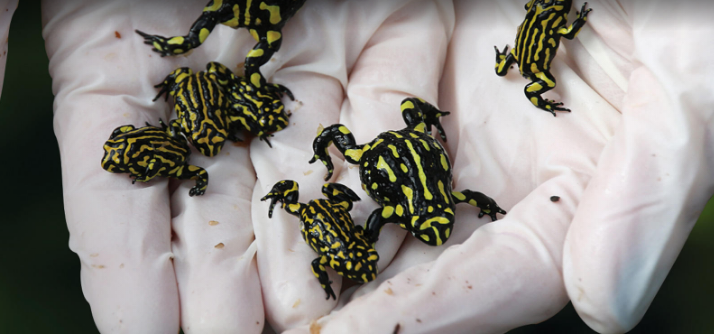
A purpose-built amphibian and reptile conservation centre is being set up at the Taronga Zoo in Mosman to serve as home to some of Australia’s unique and critically endangered species, such as the Bellinger River Snapping Turtle and the Corroboree Frog. It is expected to be fully operational within 2022.


Read: Conservation Society in Mosman to Build World’s First Platypus Sanctuary


This comes after the NSW Government approved of the facility, which will replace the existing Reptile World exhibit.

The exhibit, quite popular among locals, will be demolished to make way for a new on-site Wildlife Hospital.

taronga zoo
Artist’s impression of Amphibian and Reptile Conservation Centre (Photo credit: NSW Government)

The Taronga Conservation Society said it will be an educational and multi-layered experience for guests that showcases the beauty and diversity of some of the most misunderstood and most imperilled creatures on the planet under threat, from climate change, disease and habitat modification.

wildlife hospital taronga
Artist’s impression of Wildlife Hospital (Photo credit: https://taronga.org.au) 

“Taronga is a leader in reptile and amphibian conservation in Australia. We have brought back seven reptile and amphibian species from the brink of extinction,” the group stated.

This includes the Bellinger River Snapping Turtle, a short-necked freshwater turtle often found in the deeper pools of rivers. They are considered critically endangered or are facing an extremely high risk of extinction in the wild.

Minister for Planning and Homes, Anthony Roberts expects that the new conservation centre at the Taronga Zoo will be a drawcard for tourists and locals. 

corroboree frog
Corroboree Frog (Photo credit: https://taronga.org.au) 

“Taronga is such an important part of Sydney, not only in its role of providing care for more than 4,000 animals but also in being an amazing place for the public to explore and learn about the natural world,” Mr Roberts said.

“It will bring guests eye to eye with unbelievable animals, help spark a connection and inspire action for years to come.”

The new purpose-built facility is designed by DWP (Design Worldwide Partnership) with landscape architecture by Context Landscape Architecture.

Enjoy World Honey Bee Day in Mosman With these Buzz-Worthy Cocktails

Did you know that every third Saturday of August is World Honey Bee Day? Thanks to these hard-working insects that are major contributors to the multiplication of food crops, alcohol producers across the world have been using their golden, thick liquid gold in their range of spirits, wines, and even beers!


If you’re game for buzzing about the value of honey, below are some recipes to enjoy some sweet and smooth cocktails at home on World Honey Bee Day. 

HONEY FIZZ with CAZCABEL TEQUILA

Ingredients:

  • 50mL Cazcabel Honey
  • Soda water
  • Lemonade
  • 4 Lime Wedges

Method:

  • Add Cazcabel Honey over ice
  • Squeeze and add the lime wedges
  • Top up with soda water and lemonade, stir
Photo Credit: Supplied

HONEY PINEAPPLE MARGARITA with CAZCABEL TEQUILA

Ingredients:

  • 30mL Cazcabel Honey
  • 20mL Cazcabel Blanco
  • 25mL Lime juice
  • 25mL Pineapple juice
  • 5mL Agave syrup

Method:

  • Shake all ingredients and strain into a rocks glass with fresh ice
  • Garnish with orange peel and pineapple leaf
Photo Credit: Supplied

HONEYCOMB ESPRESSO MARTINI with DUBLINER WHISKEY

Ingredients:

  • 60ml Dubliner Whiskey & Honeycomb Liqueur 
  • 15ml Mr Black Coffee Liqueur
  • 30ml Espresso

Method:

  • Shake all ingredients with ice in a cocktail shaker until chilled.
  • Fine strain into a chilled cocktail glass.
  • Garnish with coffee beans or honeycomb bark.
Photo Credit: Supplied

THE QUEEN BEE with DUBLINER WHISKEY

Ingredients:

  • 60ml Dubliner Whiskey & Honeycomb Liqueur 
  • 15ml Fresh Lemon Juice
  • 10ml Sugar Syrup
  • 1 Tsp Forest Berry Jam
  • 3 Dashes Of Orange Bitters

Method:

  • Combine all ingredients and shake with ice.
  • Double strain into a chilled Martini glass.
  • Add orange twist garnish and enjoy!
Photo Credit: Supplied


The spirits are all available to purchase from national retailers including Dan Murphy’s Mosman on 718-728 Military Rd and BWS Mosman on 56 Avenue Rd. To place an order for contactless delivery or pick up visit the official sites: Dan Murphy’s | BWS

For COVID-safe protocols, read up Dan Murphy’s conditions for delivery, pick up, and order tracking and BWS’s delivery conditions and scheduling.


Meanwhile, beekeepers in Australia are encouraging the public to plant more flowering plants in their backyards and suburban community gardens to prevent its decline. Suburban gardens are pesticide-free, which will benefit the bee population.

ACU Mansion in Mosman Sells for $6.6 Million

The official residence of the Australian Catholic University vice-chancellor in Mosman has been sold for $6.6 million, nearly 30 years after it became a university property. 


The mansion on Kirkoswald Ave used to be the home of Professor Greg Craven and his family but he retired from his job after 13 years. 

The university’s chief operating officer, Dr Stephen Weller, said they decided to put the ACU mansion up for sale to address the priorities of the university’s overall budget, which means that the new vice-chancellor, Professor Zlatko Skrbis, will no longer be able to move into the executive residence.  

Built in 1904 in the suburb’s Golden Triangle with rows of expensive houses and just a few metres away from the Balmoral Beach Club, the house was expanded to become a five-bedroom dwelling with several living areas, a study, and a pool. The ACU mansion stood next to the residences of environmentalist Rob Purves and philanthropist Neil Balnaves.

Bernard Ryan and Geoff Smith from Ray White Lower North Shore Group said that five investors had their eye on the property. Mr Ryan said that the availability of quality residences in a good location is rare. 

In 1992, then vice-chancellor Professor Peter Drake was the first to live in the Mosman mansion after the ACU acquired the site for $885,000.

Photo Credit: Google Maps

Meanwhile, Prof Skrbis joined ACU in 2018 after working for Monash University and the University of Queensland. An accomplished sociologist, Prof Skrbis is the fourth vice-chancellor of the Mosman university. He said he will ensure that ACU remains a globally recognised Catholic institution. 


“As we move forward, we will create impact by adhering to our Catholic mission and remaining committed to the pursuit of knowledge, the dignity of the human person, and the common good,” Prof Skrbis said as he released his strategic plan under the university’s new leadership.

“We will continue to offer our students an inclusive, ethics-based education, and we will search for solutions to local and global challenges through mission-aligned research. We will also support the broader community and advocate for those who are unable to advocate for themselves.”

Work on Major Upgrades for Taronga Zoo To Start Soon

In a few months, construction will be underway for Taronga Zoo upgrades, to make the popular Mosman destination even more attractive to tourists. 


Read: Conservation Society in Mosman to Build World’s First Platypus Sanctuary


Minister for Planning and Public Spaces Rob Stokes said the $16 million upgrade works to the Australia Precinct would include:

  • a canopy walk from which to view koalas
  • extensions to the kangaroo and wallaby “walkthrough experience”
  • underwater viewing of platypus
  • improvements to the nocturnal exhibition

The centrepiece of the proposed Taronga Park revamp will be the new Wildlife Hospital and Nutrition Centre, which will offer visitors and tourists new educational and wildlife experiences. It’s going to be three storeys and will feature rehabilitation facilities including a marine rescue unit, intensive care hub for marine turtles, surgery rooms, pathology labs, and necropsy rooms.

The zoo revamp will create almost 800 construction jobs and once completed, the Taronga Zoo’s development is expected to contribute over $16 million into the State’s economy.

Plans for Taronga Zoo (Photo credit: planning.nsw.gov.au) 

“Taronga Zoo is one of Australia’s most iconic tourist destinations and this revamp will place greater emphasis on some of our nation’s most iconic animals,” Mr Stokes said.

Member for North Shore Felicity Wilson said the zoo is one of the most popular public spaces in NSW and this funding is great news for the local community and visitors alike.

 “Our community is so proud to have Taronga Zoo in our local area and a revitalised Australia Precinct means greater focus on giving visitors the opportunity to interact with animals that are unique to Australia,” Ms Wilson said.

The project is expected to be completed by 2023. To stay updated about Taronga Zoo’s upgrades, visit https://taronga.org.au/.

About Taronga Zoo

Water bird enclosure at Taronga Zoo when it opened in 1916 (Photo credit: State Library of New South Wales)

Taronga Zoo first opened its doors in 1916 by Mr Le Soeuf, the Director, based upon contemporary models set in Europe and America. The landscaping preserved the natural features of the landscape and the housing requirements of the animals were constructed, where possible, to the prevailing rock and tree formations.

The Giraffe House was completed in 1923, the Aquarium in 1927, Floral Clock in 1928, Tahr Mountain in 1932 and the Tiger Pits in 1939. Under the directorship of Edward Hallstrom in the 1940’s – 1960’s several new exhibits were built including those for larger cats, koalas, apes and gorillas.


Read: Taronga Zoo Sydney Welcomes First Baby Koala in a Year


Mosman Advocate Raises Concerns on The Spit Road Upgrades

One of the newest road upgrades at The Spit in Mosman has sparked much controversy, with one local going as far as saying the updates constitute some of the most dangerous changes he’s seen in 25 years.


According to Harold Scruby, chairman of the Pedestrian Council of Australia, the newly-completed traffic upgrades along The Spit which were implemented to improve safety along the road have instead had the opposite effect. The primary concerns he had listed were confusing paving, the lack of safety rails, traffic signage he deemed conflicting, and road layouts that led to cars facing one another when parked. 

The project, which cost a total of $1.4 million, revolved around the construction of a mixed-use sliplane between The Spit Rd and nearby business by the Mosman Council. These upgrades, however, led to the creation of paving that resembles pedestrian walkways, making for an incredibly confusing experience for those attempting to cross the road. 

Photo credit: Mosman Council

One of the bus stops within the area also fails to have a clear line of sight between the bus shelter and the slip road behind it. Mr Scruby had commented that if a pedestrian was to get off the bus and walk to the beach, they would be in danger as there’s no line of sight from behind the bus shelter. 

Photo credit: Mosman Council

Despite Mr Scruby’s claims, the Mosman Council’s director of environment and planning, Craig Kovich, mentioned that his outrage was not entirely proportional to the risk, and that the man had no clear evidence in terms of his expertise on road design, safety audits, and traffic management.  

The Mosman Council later mentioned that the upgrades implemented along The Spit roadway underwent safety assessments including an audit by a qualified engineer. Certified experts had designed this section of the road to improve pedestrian safety, and the council is currently unaware of any traffic accidents involving pedestrians since the upgrade was implemented.

Despite the lack of accidents, Harold Scruby proposes that the new roadway upgrades could be fixed dropping the speed limit from 60kmh to 10kmh, increasing signage, creating pedestrian barriers and clearer paving to differentiate them, and improving overall line of sight.

Conservation Society in Mosman to Build World’s First Platypus Sanctuary

Plans are being made by the NSW Government and Mosman-based Taronga Conservation Society to construct the world’s first sanctuary for platypus, a species at risk of extinction due to climate change and drought.


There are currently plans in the works to construct a specialist facility that consists of ponds and burrows to provide platypuses with a safe environment where they can repopulate, be rehabilitated, and be studied.

The facility will be built 391km away from Sydney, set to finish construction by 2022. It will be able to house up to 65 platypuses. Given the creature’s highly specific needs to thrive, the platypus sanctuary will be able to give researchers insight on what environments and conditions they prefer. 

Platypuses themselves are reclusive, curious-looking mammals that are semi-aquatic in nature, sporting fur, webbed feet, and a bill that helps them scoop up insects, shellfish, and worms. Despite the fact that platypuses are mammals, they lay eggs — a trait it shares with its close relative, the echidna — and live in small streams and lazy rivers. 

They are considered a protected species, with fears that they might go extinct in the New South Wales region within the century. The droughts that followed the bushfires from 2019 to 2020 led to an increase in platypuses with climate-related injuries and illnesses.

The Taronga Zoo Sydney, managed by the Taronga Conservation Society, can be found at Bradleys Head Rd, open every day of the week from 9:30 a.m. to 5:00 p.m. For more information, visit their website here. Follow the Taronga Zoo Sydney’s social media accounts on Facebook and Instagram for the latest updates and announcements.

Residents in Affluent Mosman Neighbourhood Suffer from Smelly ‘Schitt’s Creek’

Residents of an affluent and leafy Mosman neighbourhood have been calling a nearby stormwater drain their very own Schitt’s Creek, not for the popular Emmy award-winning comedy series but for its longstanding stench. 

Quakers Hat Bay locals said that they’ve been dealing with sewer smell for more than two years and they are concerned about the unbearable stench’s effects on the people, especially the children who play outdoors. 


The homeowners recently received anonymous notes from a concerned group who questioned what Sydney Water and the contractors have been doing to fix this problem. The lavatory smell would sometimes last for a week and its odour is much more worse in the morning when residents are out for a walk or a jog. 

According to reports, as many as 100 properties in this Mosman neighbourhood are affected by the lingering sewage stench. 

In 2017, Sydney Water and its contractor started a $100 million once-in-a-generation repair and upgrade of the Northern Suburbs Ocean Outfall Sewer that stretches 28-kilometres across North Head at Manly. This tunnel collects about 25 percent of Sydney’s wastewater but the scope of the work has brought problems and delays. 

Mosman neighbourhood
Photo Credit: Sydney Water

A spokesperson for Sydney Water confirmed receiving reports of the stench and they have been trying to minimise the odour with ventilation systems, gas suppressants and a temporary access enclosure near Quakers Hat Bay and The Spit. 


The agency has also hired specialists to monitor the reports or complaints and then dispatch odour control measures amidst allegations that the contractor is not adhering to conditions in their contract. 

In the meantime, the residents are growing frustrated as they have been told different reasons for the delays, including COVID-19. The Northern Suburbs Ocean Outfall Sewer upgrade was supposed to be completed in 2020. 

Mosman Council Spit East Upgrade Shifts To Stage 2A

The Spit East Road upgrade in Mosman, which commenced in October 2018, has entered stage 2A of its work plan in March 2019. As a result, access to this area will be limited until the project’s completion in June.

The upgrade’s progress, however, has been on schedule and locals will soon be able to benefit from the following facilities:


Stage 1A
new bus bay, bus shelter
new laneway by the foreshore
completed

Stage 1B
new bike hoops, waiting area seats
new landscaping, trees & garden beds
completed

Stage 2A
new parking area, signages
new footpaths to the commercial area
March to April 2019

Stage 2B
new paving, additional landscapingMay to June 2019


“The objectives of the Spit Road streetscape upgrade are to enhance pedestrian safety and accessibility, mitigate flooding, enhance the landscaping and amenity of the area, and improve access to public transport,” as cited in the upgrade’s report.

Photo Credit: Mosman Council

Funding for the Spit East upgrade comes from the B-Line project sponsored by the State Government. The Council had a series of consultations with the public since 2016 to determine what should be prioritised in the upgrade.


Mosman Rowers Reopens This March With New Archie Bear Restaurant

Mosman Rowers reopens this March with a refurbished building and a new restaurant, Archie Bear, to cater to its members and guests.

Not long ago, the clubhouse standing on Centenary Drive since 1911, nearly permanently closed its doors due to dilapidation and mismanagement.

Through a community drive that began in September 2018, however, Mosman Rowers was able to raise more than $110,000 to repair and update the structure. By November, the club also received 400 new member registrations made up of young professionals, thus ensuring the club’s longevity.


Hospitality group Bird and Bear is behind the operation and management of Archie Bear at the clubhouse. The company also owns The Sandy Bear in Clontarf and The Flying Bear in Kirribilli.

The new restaurant is on the ground floor of the three-storey structure. It has the capacity to seat 100 guests indoors and 40 people outside.


Meals served at the Archie Bear include an all-day menu consisting of breakfast and lunch choices. Members may order a bowl of porridge, poached eggs, smashed avocado on toast, a selection of pizza and burgers, or bacon and egg rolls with their cocktail drinks.

Photo Credit: Mosman Rowers/Facebook

On the second floor of the Mosman Rowers clubhouse is the Rowers Bar, while the top floor serves as a function room to be rented out to members and their guests.

Photo Credit: Mosman Rowers/Facebook

The newly-refurbished Mosman Rowers is still a clubhouse, thus membership is required to avail of the perks. However, the restaurant is open to the public.