Inside the Transformation of a Historic Mosman Site

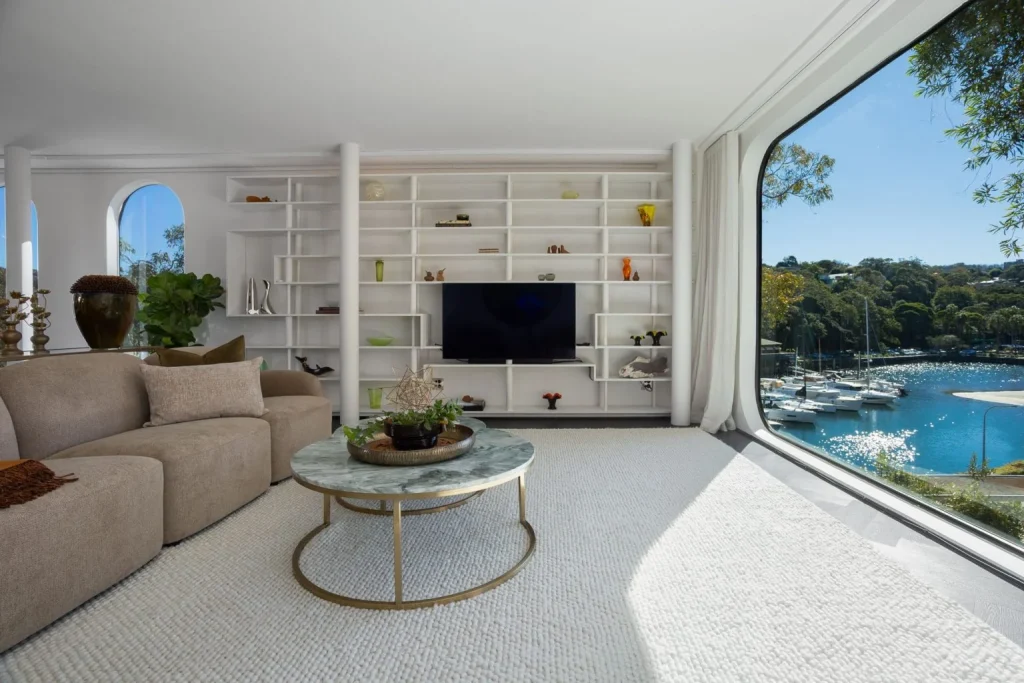
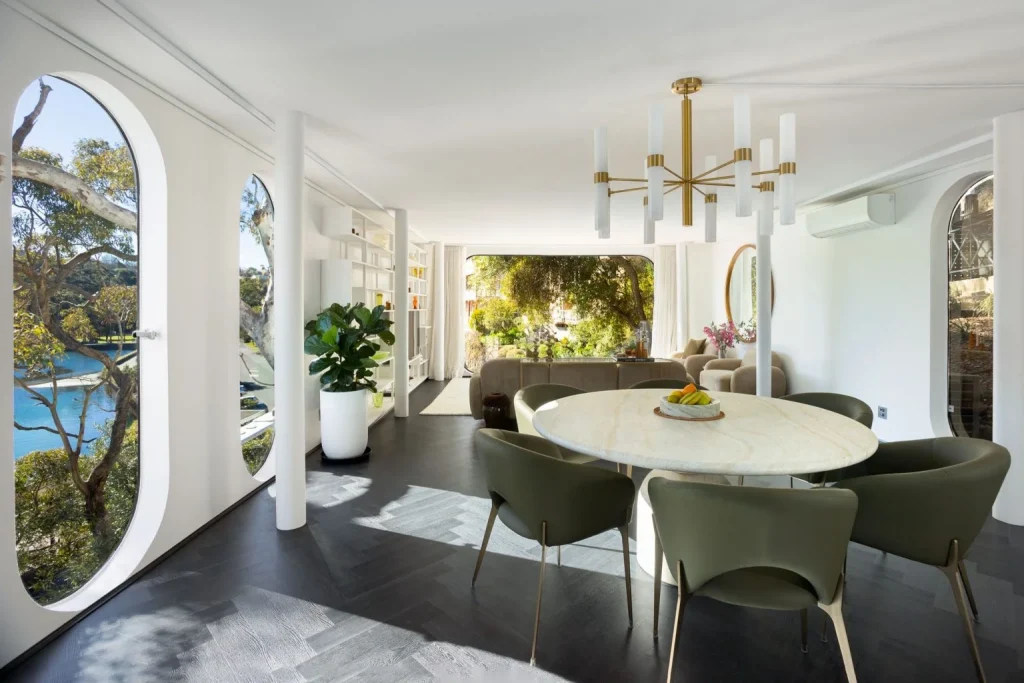
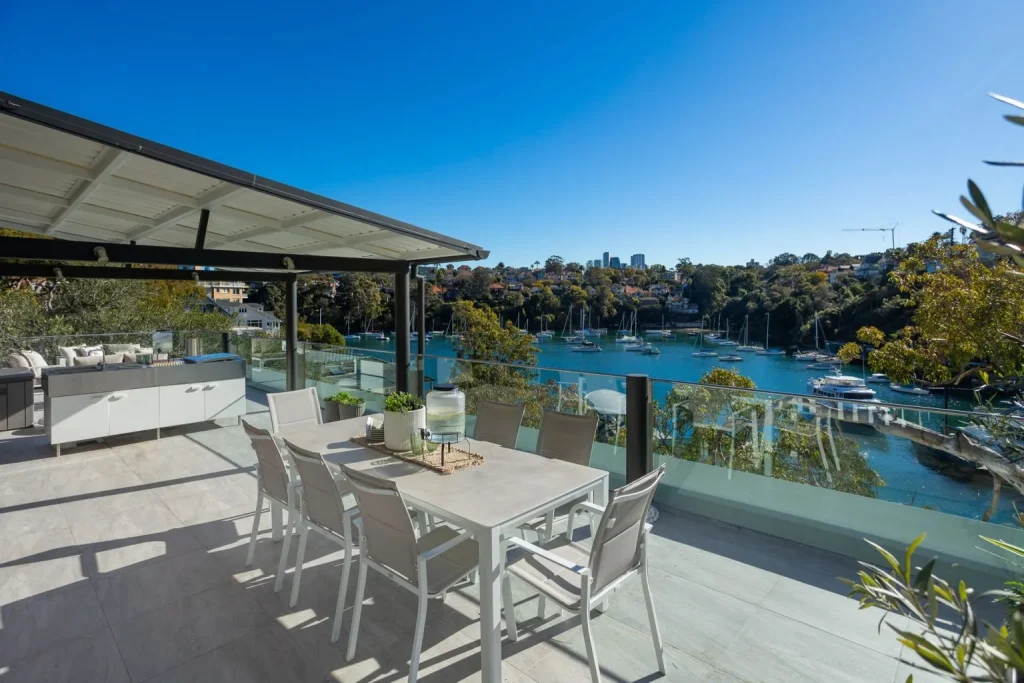
A new three-storey mansion in the harbourside suburb of Mosman has set a striking new benchmark for local luxury, arriving on the market with a $28 million price tag that highlights the area’s evolving character.


The property journey began decades ago when Kathleen Laurence bequeathed her original 1940s home to the University of Sydney, with the condition that her sister, Angela, could reside there for the remainder of her life. After that period concluded, the university held the land for half a century before selling it for $5 million in 2022. 

Following that sale, the site underwent a complete change under the direction of Tony Antonios of ORO, who transformed the block into a modern residence that stands in stark contrast to the modest home that previously occupied the space.

Luxury Living on the Harbour

Mosman
Photo Credit: Atlas

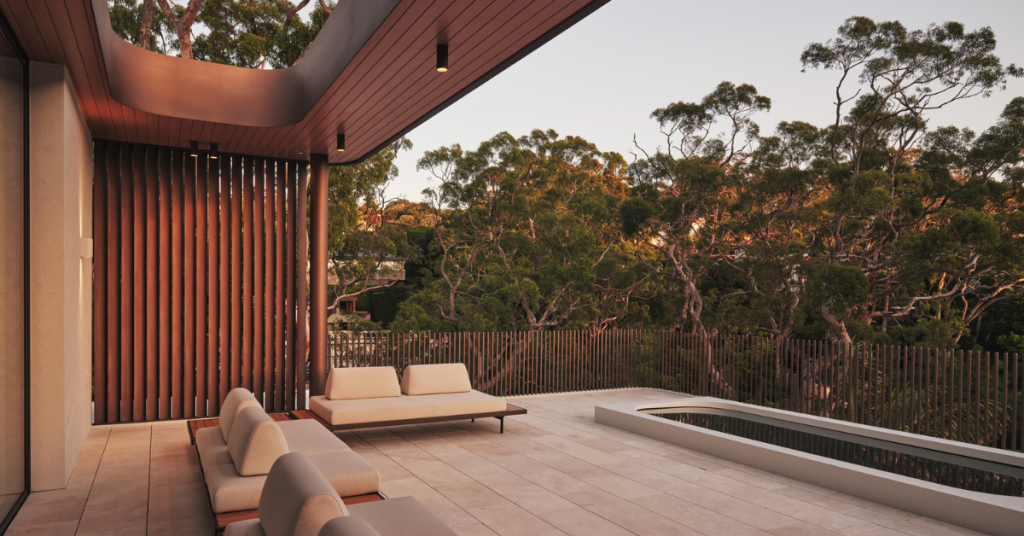
The new build occupies more than 1,030 square metres of land that directly borders the quiet surroundings of the Sirius Cove Reserve. The layout is designed to focus on high-end leisure and daily comfort, featuring a dedicated wellness wing equipped with a gym, a sauna, a steam room, and both hot and cold plunge pools. 

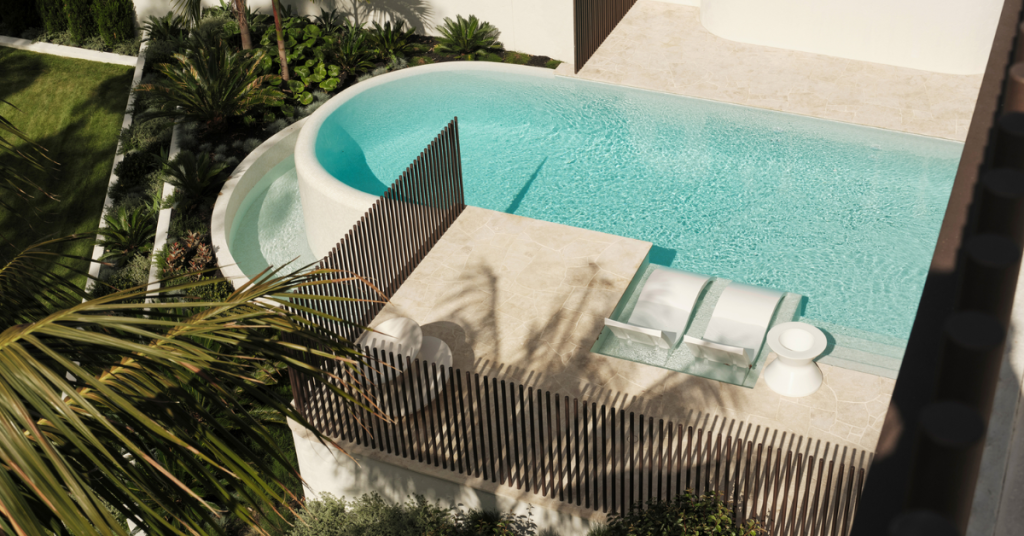
For entertainment, the home includes two separate cinema spaces, one positioned inside and the other designed for high-performance outdoor viewing. The exterior grounds further feature an illuminated infinity pool and a lounge area built around a firepit.

Attention to Detail

Mosman
Photo Credit: Atlas

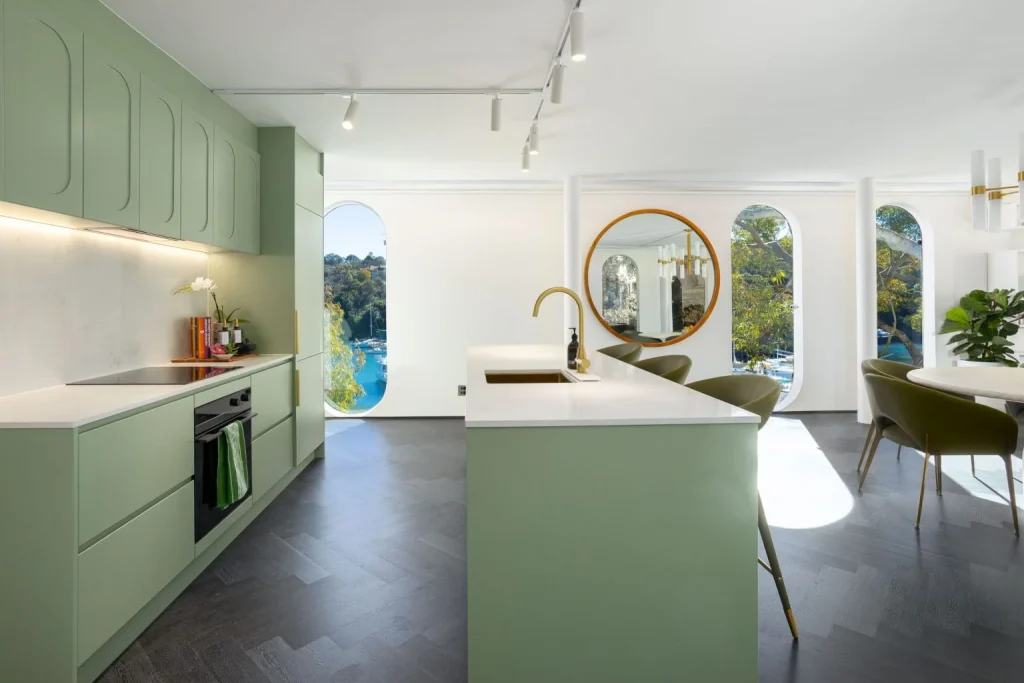
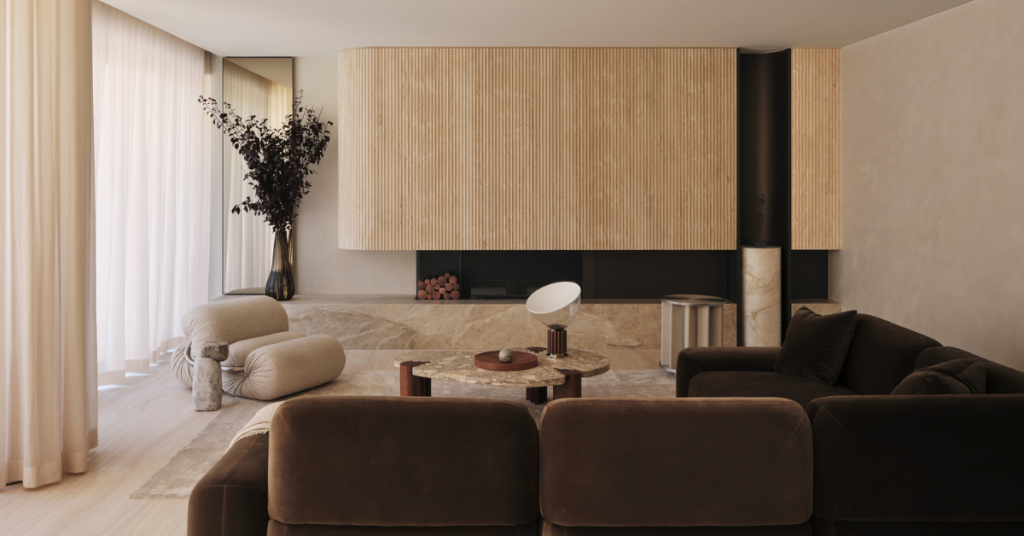
Inside, the home prioritises both convenience and scale, with a lift providing access to every floor. The kitchen serves as a primary feature of the interior, defined by a single piece of curved marble for the island bench, complemented by a concealed commercial-grade cooler room and a large butler’s pantry. 

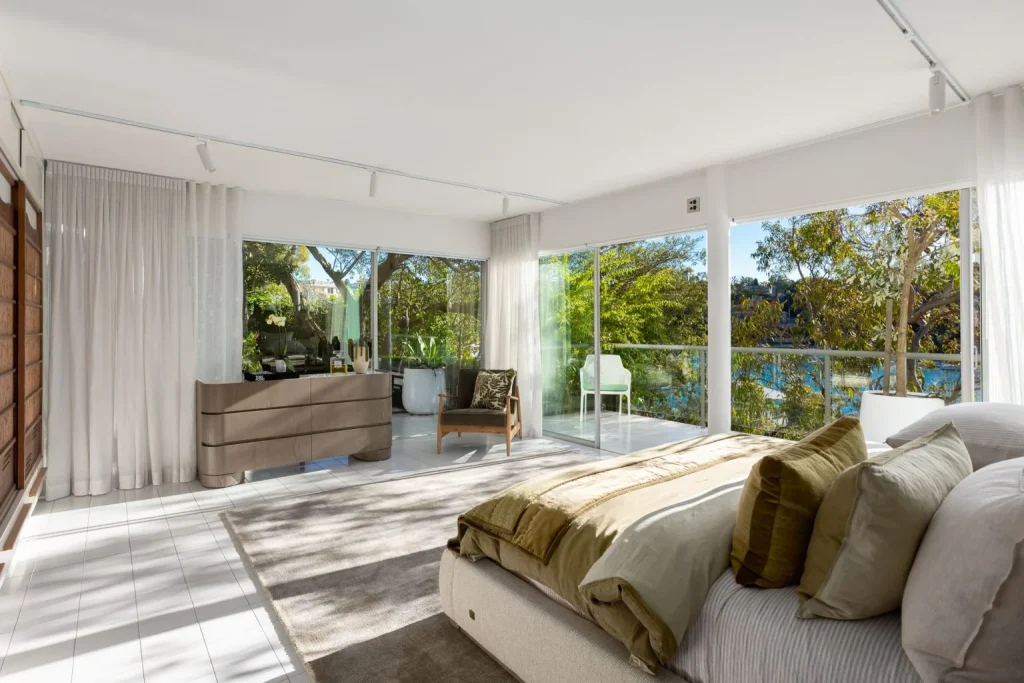
Each of the five bedrooms includes its own private ensuite, while the primary bedroom offers a large dressing room fitted with an illuminated cabinet for jewellery. The secondary spaces include a formal library, a sitting room, a wine cellar, and a spacious garage with a turntable to assist with vehicle movement.


Market Interest

Mosman
Photo Credit: Atlas

Local interest in the property has been steady, with people who have toured the home noting the high standard of construction. Michael Coombs of Atlas, who is managing the sale, stated that the level of detail provided by the builders is unlike anything he has encountered during his 25 years working as an agent. 

He observed that visitors often arrive expecting a standard high-quality build, but typically leave feeling that the property is one of the most impressive they have ever seen. The house has already become a frequent topic of conversation among residents in the surrounding suburbs.

Published Date 26-June-2026

New Walking Bus Service to Escort Mosman Students to School

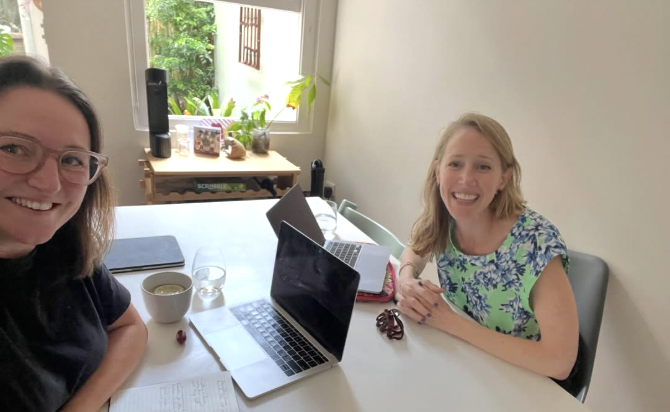
Two Mosman residents have launched a paid walking bus service called walked.by, offering to escort local children to and from school for $5 per trip as a Term 3 pilot in the suburb.


Julia Edgar and Sophie Krynauw started the service after noticing that many children living close to school are still dropped off by car because morning schedules are so tight. Their answer is walked.by, a structured walking bus service that puts a trained adult in charge of a small group of children along a fixed neighbourhood route.

Mosman’s geography makes the concept unusually well-suited to the area. Five schools cluster around the village, including Mosman High at 769 Military Road, Mosman Public on Belmont Road, Sacred Heart on Cardinal Street, Mosman Prep on Shadforth Street, and Queenwood and Blessed Sacrament both on Queen Street.

Beauty Point and Middle Harbour public schools sit further north toward The Spit. In a suburb of just 8.7 square kilometres, most students already live within walking distance of their school gate.

A simple idea with a lot going for it

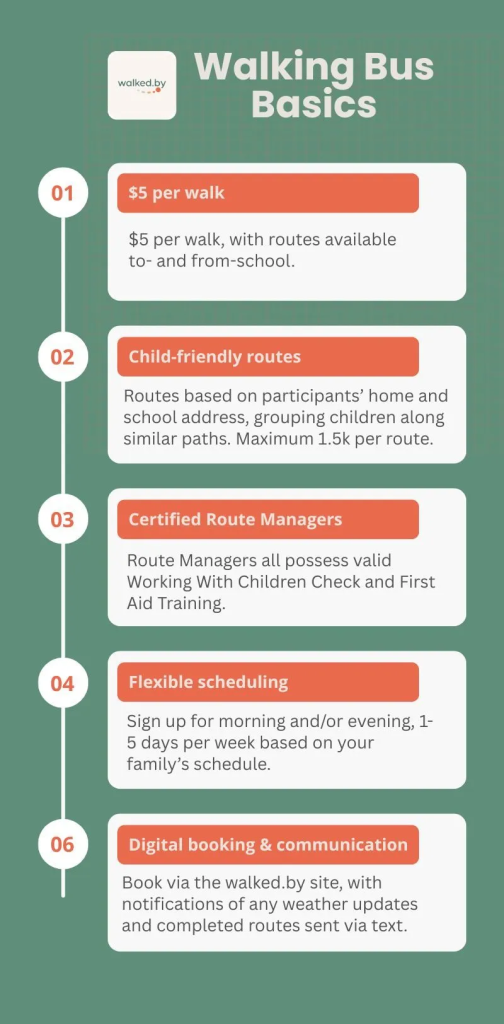
The walked.by model works like this: trained adults called Route Managers collect children from fixed pick-up points along a capped 1.5-kilometre route and walk them to school in the morning, then bring them home again in the afternoon. Every Route Manager holds a Working With Children Check and first aid certification.

Photo Credit: walked.by

Families choose the days that suit them, from one to five per week, and can book either the morning run, the afternoon run, or both. A text confirms when the route is complete.

The service covers children from Kindy through Year 7. The service costs $5 per walk, and registrations are now open for the Term 3 pilot starting in mid-July 

Julia brings significant professional experience to the venture, having led marketing roles for Amazon, HSBC and T-Mobile, while Sophie spent close to two decades in financial services. Both are Mosman residents and parents who know firsthand what the morning looks like when logistics and time collide.

“Children who live five or ten minutes from their school arrive by car, because the logistics of the morning just don’t give families another option,” Julia said. “Walking has become something that happens when you have time, and nobody has time.”

More than just getting there on time

The case Julia and Sophie make goes well beyond solving a scheduling headache. They point to established research linking walking to school with sharper concentration, reduced stress and better road awareness in children, the kind of benefits that accumulate quietly over a school year but matter a great deal.

Photo Credit: walked.by

There is also an environmental angle. The founders estimate the Mosman pilot could remove around 16 tonnes of carbon from local roads, taking a meaningful bite out of the morning crawl along Military Road that anyone who has tried to cross it at 8:45am knows well.

“We’re not just solving a logistics problem,” Julia said. “We’re trying to help children build a healthy relationship with movement, with nature and with their community. That’s something you can’t get from the back seat of a car.”

If the Term 3 pilot goes well, walked.by plans to expand into after-school sport, care, and activity routes as well.

Joining the pilot or becoming a route manager

Mosman families with children in Kindy through Year 7 can register for the Term 3 pilot here. The site also carries a jobs page for anyone interested in becoming a paid Route Manager, a role that suits local residents who want flexible, community-connected work during school hours.

For general enquiries, the walked.by team can be reached at hello@walkedby.com.au. The service is based in Mosman NSW 2088 and is also on Instagram and LinkedIn.


Published 25-June-2026

Sirius Cove Showpiece to Test Mosman’s Prestige Market This Weekend

A Sirius Cove home designed by architect Susan Rothwell, which last changed hands for $13 million two years ago, will go under the hammer on-site this Saturday in what’s shaping up as a key gauge of confidence in the Mosman prestige market.


The five-bedroom property at 15A Clanalpine Street carries a guide of $14.5 million to $15.95 million through Anna Chen of BresicWhitney.

On-site auctions are something of a rarity for properties at this price point. Deals of this scale are typically hashed out behind closed doors rather than fought over in front of a crowd, which makes Saturday’s auction worth watching closely.

The sale comes hot on the heels of Sydney’s biggest auction result so far this year, with a six-bedroom harbourside home at 41 Vaucluse Road fetching $23.22 million under the hammer last weekend.

Vendor Paul Biller, of Biller Property, had originally floated a $22 million price tag for the Clanalpine Street home before settling on the auction format. He said the move was about manufacturing urgency around a firm deadline, rather than leaving the sale to drag on indefinitely.

It appears to be working. Four parties registered to bid and three went on to compete for the keys – a notable contrast to other homes on the same street that have languished on the market for months without finding a buyer.

Chen said interest in the home has been strong, particularly from buyers who are prioritising a family home over spreading their money across an investment portfolio. She pointed to the federal budget and broader economic conditions as a factor reshaping how wealthy buyers are thinking about where to park their capital.

According to Chen, high-net-worth buyers who once diversified their holdings widely are now leaning towards consolidating their wealth, with many already shifting capital back into their primary residence or planning to do so. She believes this trend will keep supporting demand for high-quality family homes as the market continues to adjust.

Council and sales records show the tri-level home was built in 2016 and purchased in February 2024 by Yahan Wang, a technology executive whose background is in AI-driven consumer products.

Constructed from sandstone, concrete and double brick, the property offers several distinct living zones and resort-style outdoor areas, all set behind tall hedges that shield it from the street. Despite its understated street presence, the home was designed to open up to sweeping views over Sirius Cove, with a pool and landscaped gardens completing the package.


Saturday’s result will offer fresh insight into how far buyers in Sydney’s prestige market are willing to stretch at a time when economic conditions are prompting many wealthy purchasers to rethink where they put their money.

Published 18-June-2026

Mosman Prepares For Lime E-Bikes Under Managed Rollout Plan

Mosman is preparing for the arrival of Lime e-bikes through a managed rollout, with parking controls, geofencing and public safety measures expected to shape how the service operates around beaches, wharves and busy local areas.


Mosman Lime E-Bike Rollout Moves Ahead With Local Controls

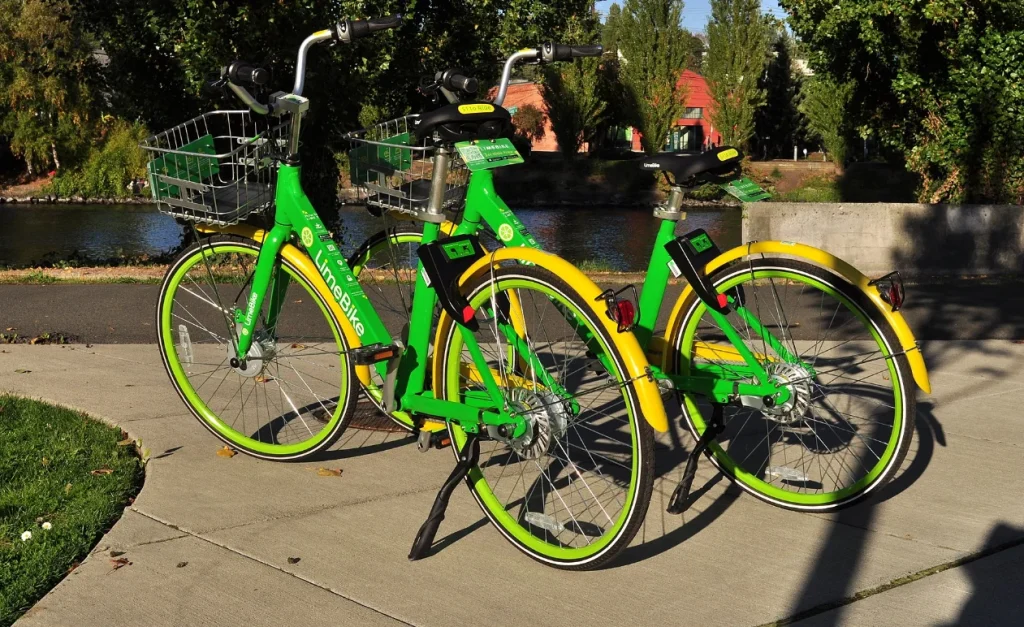
Lime e-bikes are expected to move into Mosman through a gradual soft launch, after a structured approach was endorsed for their proposed introduction.

The plan centres on lifting geofencing restrictions near Spofforth Street, allowing bikes already operating in the adjoining North Sydney area to enter Mosman through normal rider movement. Under this approach, Lime would not place bikes directly in Mosman at the start. Instead, their presence would build gradually from nearby operating zones.

Lime already operates in North Sydney and Manly, where shared e-bikes have become a familiar transport option. Their expected arrival in Mosman has prompted both interest and concern, particularly around where the bikes will be parked and how high-use public areas will be managed.

The endorsed approach recognises that the request cannot be unreasonably refused, while setting a framework aimed at balancing active transport options with safety, amenity and compliance.

Parking And Geofencing Set To Shape Mosman Use

The main local issue is how the bikes will be managed once they begin appearing in Mosman.

Concerns identified in local planning material include footpath obstruction, visual clutter and the management of bikes around foreshore and high-use public areas. Balmoral and Clifton Gardens fall within the type of locations expected to require close attention because of their public use and beachside setting.

Designated parking would be limited to selected strategic locations, including Mosman Bay Wharf, B-Line stops, beaches and commercial centres. Parks, ovals and sensitive public spaces are expected to be treated as no-go zones through geofencing.

A proposed map of parking locations and operating areas is also expected to guide the rollout before bikes begin moving into Mosman in larger numbers.

Lime e-bikes
Photo Credit: Wikipedia

North Sydney Experience Adds Caution

Mosman’s planned controls are partly shaped by the experience of nearby North Sydney, where Lime’s November 2024 rollout raised early concerns about bikes being left in unsafe or inconvenient locations.

More than 100 bikes were moved in one month after being identified as public safety risks. That experience has added weight to local concern about whether shared e-bikes can be managed without blocking footpaths, verges or other public spaces.

Public reaction has been mixed. Some residents see the bikes as a useful way to make short trips, reach beaches and avoid parking pressure. Others are concerned about bikes being left across footpaths, in cul-de-sacs, on grass verges, near parked cars or in areas where pedestrians need clear access.

Helmet use and proper parking have also emerged as points of concern in public discussion.

Cost And Compliance Remain Key Questions

Under the proposed fee model, operators would pay 80 cents per trip. Transport for NSW would retain 60 cents, while 20 cents would go towards local enforcement, complaints and infrastructure costs.

Mosman’s planning material warns that this amount may not fully cover the cost of managing the service. That makes compliance, monitoring and response times important parts of the rollout.

Lime has indicated that improperly parked bikes are generally removed within four hours. The practical test for Mosman will be whether parking zones, geofencing and response systems are enough to manage the service without creating avoidable problems in busy public areas.


Mosman is preparing for Lime e-bikes as a managed transport change rather than a direct fleet drop. The strongest focus is expected to remain on beaches, wharves, commercial centres and other places where public access and clear pathways matter most.

Published 5-June-2026

Mosman House Turned Empty Rooms Into Safe Nights For Older Women

A vacant former retirement home in Mosman became more than an unused building awaiting its next purpose. Over five years, it was transformed into a place of safety for older women facing housing insecurity, delivering more than 25,000 safe nights and helping many residents move towards permanent housing.


A Mosman Building Given A New Purpose

Between 2020 and 2025, Mosman House turned an empty former retirement home into 18 transitional homes for women aged 50 and over.

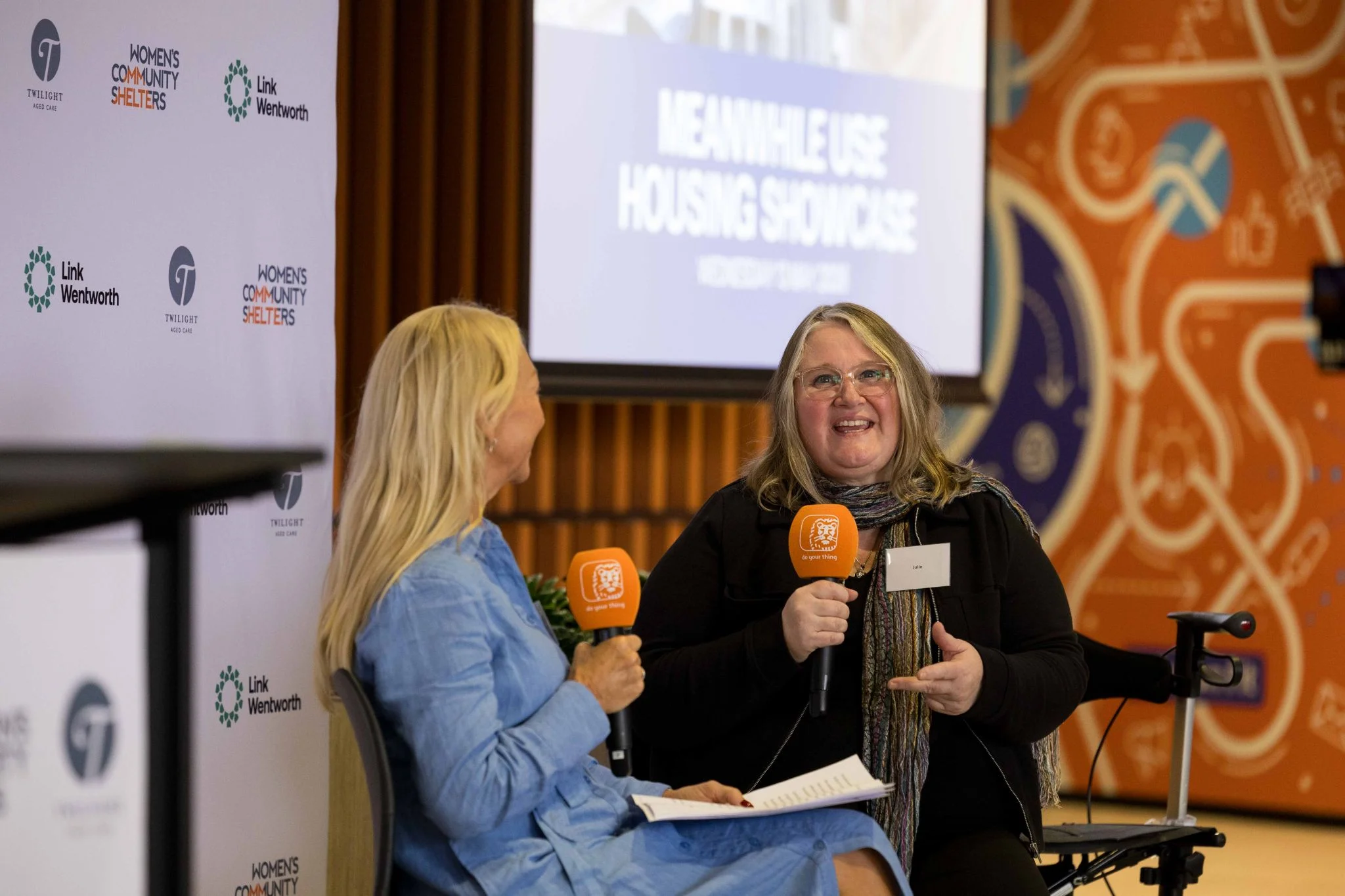
The project supported 57 women during that period, using a Meanwhile Use housing model that allowed an unused property to provide short- to medium-term accommodation while longer-term plans for the site remained ahead.

Mosman House
Photo Credit: Link Wentworth/LinkedIn

It was a practical idea with a deeply human outcome. Rooms that may otherwise have sat empty instead became places where women could pause, regain stability and begin working towards a more secure future.

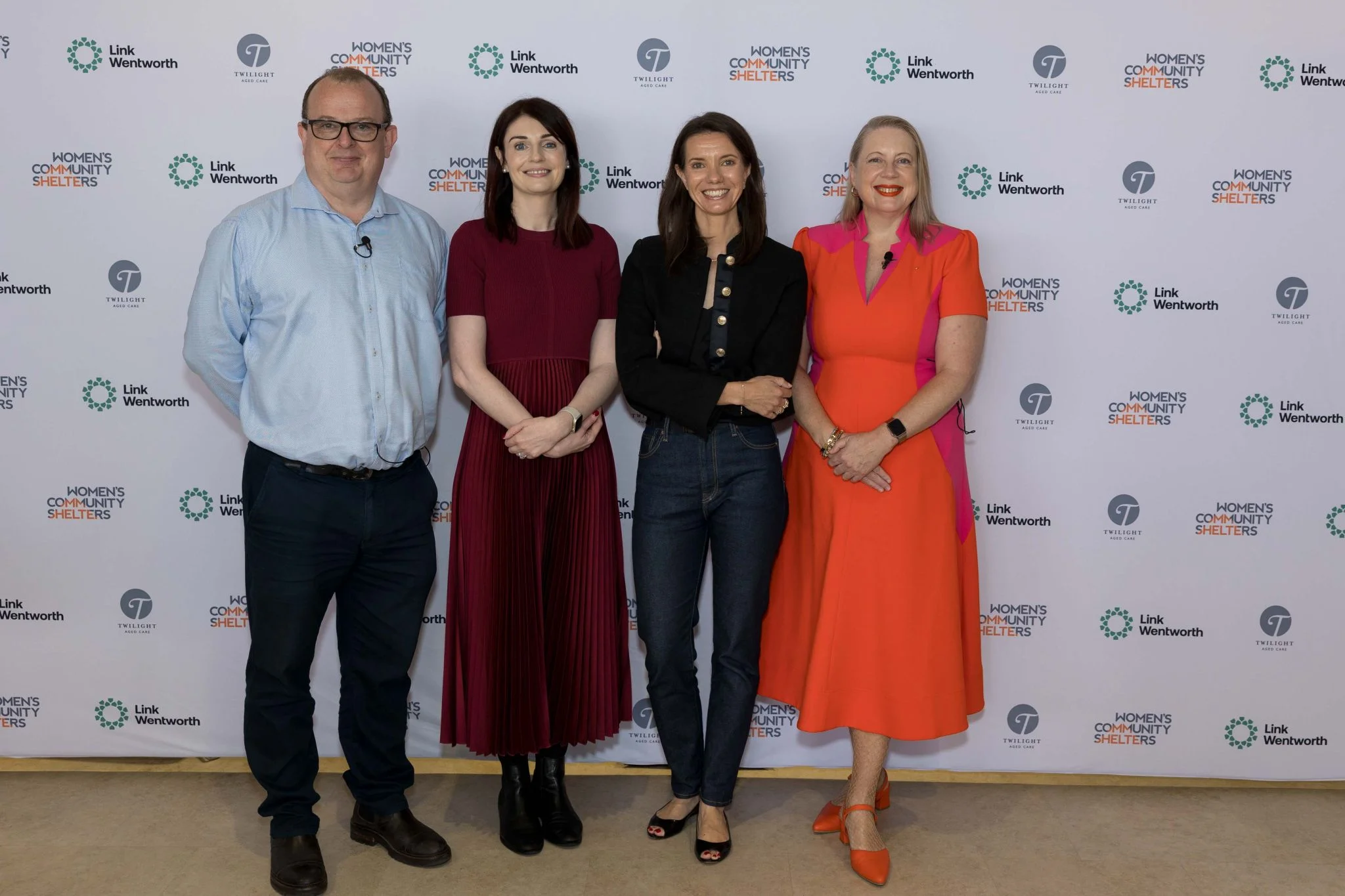
Mosman House was delivered through a partnership between Link Wentworth, Women’s Community Shelters and Twilight Aged Care, with support from corporate and philanthropic donors.

Safety, Stability And A Pathway Forward

The women who stayed at Mosman House ranged in age from 50 to 81, with an average age of 59. Many arrived after facing circumstances that made secure housing difficult to access.

Affordability pressures were the most common barrier, affecting 42 per cent of residents. Domestic and family violence accounted for 23 per cent, while financial hardship accounted for 20 per cent.

The project was designed to bridge the gap between crisis accommodation and permanent housing. It offered residents a stable place to stay while support was provided to help them work towards longer-term accommodation.

One former resident shared how Mosman House supported her after unexpected life events left her without stable housing. Her experience reflected the broader purpose of the project: not only to provide temporary shelter, but to give women a safer setting while they rebuilt their next steps.

More Than 25,000 Safe Nights In Mosman

Across five years, Mosman House delivered more than 25,000 safe nights for vulnerable older women.

The outcomes showed the strength of the model. Eighty-four per cent of women who stayed at Mosman House were offered safe, permanent housing after their time in the program.

The project also operated at $46.75 per bed night. That was lower than Women’s Community Shelters’ 2025 average crisis shelter bed night of $130 and the temporary accommodation sector average of $165 listed in the project material.

Beyond the housing figures, the project also created lasting social connections. Many residents remained in touch after leaving the program, showing how a safe housing setting can support connection as well as accommodation.

transitional housing
Photo Credit: Link Wentworth/LinkedIn

A Practical Model With A Human Result

Mosman House has since been presented as a case study in Meanwhile Use housing. Its success came from a simple but powerful idea: an empty property could be used to meet immediate housing need instead of remaining unused.

For the women who stayed there, the project offered safety during periods of instability. For the organisations behind it, Mosman House showed how vacant buildings can be temporarily adapted into meaningful accommodation while permanent housing options are pursued.


The result was not only measured in homes, costs or program figures. It was also seen in the thousands of nights where older women had a safe place to sleep, steady support around them, and a clearer path towards secure housing.

Published 13-May-2026

Mosman House Turned Empty Rooms Into Safe Nights For Older Women

A vacant former retirement home in Mosman became more than an unused building awaiting its next purpose. Over five years, it was transformed into a place of safety for older women facing housing insecurity, delivering more than 25,000 safe nights and helping many residents move towards permanent housing.


A Mosman Building Given A New Purpose

Between 2020 and 2025, Mosman House turned an empty former retirement home into 18 transitional homes for women aged 50 and over.

The project supported 57 women during that period, using a Meanwhile Use housing model that allowed an unused property to provide short- to medium-term accommodation while longer-term plans for the site remained ahead.

Mosman House
Photo Credit: MosmanCouncil

It was a practical idea with a deeply human outcome. Rooms that may otherwise have sat empty instead became places where women could pause, regain stability and begin working towards a more secure future.

Mosman House was delivered through a partnership between Link Wentworth, Women’s Community Shelters and Twilight Aged Care, with support from corporate and philanthropic donors.

 transitional housing
Photo Credit: MosmanCouncil

Safety, Stability And A Pathway Forward

The women who stayed at Mosman House ranged in age from 50 to 81, with an average age of 59. Many arrived after facing circumstances that made secure housing difficult to access.

Affordability pressures were the most common barrier, affecting 42 per cent of residents. Domestic and family violence accounted for 23 per cent, while financial hardship accounted for 20 per cent.

The project was designed to bridge the gap between crisis accommodation and permanent housing. It offered residents a stable place to stay while support was provided to help them work towards longer-term accommodation.

One former resident shared how Mosman House supported her after unexpected life events left her without stable housing. Her experience reflected the broader purpose of the project: not only to provide temporary shelter, but to give women a safer setting while they rebuilt their next steps.

older women housing
Photo Credit: MosmanCouncil

More Than 25,000 Safe Nights In Mosman

Across five years, Mosman House delivered more than 25,000 safe nights for vulnerable older women.

The outcomes showed the strength of the model. Eighty-four per cent of women who stayed at Mosman House were offered safe, permanent housing after their time in the program.

The project also operated at $46.75 per bed night. That was lower than Women’s Community Shelters’ 2025 average crisis shelter bed night of $130 and the temporary accommodation sector average of $165 listed in the project material.

Beyond the housing figures, the project also created lasting social connections. Many residents remained in touch after leaving the program, showing how a safe housing setting can support connection as well as accommodation.

safe accommodation
Photo Credit: MosmanCouncil

A Practical Model With A Human Result

Mosman House has since been presented as a case study in Meanwhile Use housing. Its success came from a simple but powerful idea: an empty property could be used to meet immediate housing need instead of remaining unused.

For the women who stayed there, the project offered safety during periods of instability. For the organisations behind it, Mosman House showed how vacant buildings can be temporarily adapted into meaningful accommodation while permanent housing options are pursued.


The result was not only measured in homes, costs or program figures. It was also seen in the thousands of nights where older women had a safe place to sleep, steady support around them, and a clearer path towards secure housing.

Published 7-May-2026

The Mosman Sailor Who Sailed to 100 and Never Stopped Winning

Gordon Ingate OAM, who grew up in Mosman and went on to become Australia’s oldest Olympian, the world’s oldest living sailing Olympian, and one of the most beloved figures in the country’s maritime history, died on 24 April 2026, just weeks after celebrating his 100th birthday on Sydney Harbour with a gathering of family and friends who had followed his wake across eight decades of racing.


He was still sailing his much-loved timber sloop Jasnar on Sydney Harbour just two weekends before he died.

Known throughout the waterfront as Wingnut, later shortened to Wingy, Ingate embodied a particular kind of Australian sailing character: competitive, irreverent, self-deprecating about his chronic seasickness, and entirely incapable of staying off the water. Australian Olympic Committee President Ian Chesterman captured it succinctly.

“He had a remarkable record as a sportsman, but also as someone who made a real difference across his 100 years. A truly exceptional person,” Chesterman said.

A Mosman Boy, a Sea Scout, and a Lifelong Obsession

Ingate’s connection to the water began in Mosman, where he grew up alongside Sydney Harbour and joined the Sea Scouts at age nine. It was at Mosman Amateur Sailing Club that he would later meet the two most important people of his sailing life: Nina Saalfeld and her daughter Sally, who sailed on the family’s double-ended sloop, also named Jasnar.

His offshore racing career began when he was introduced to the sport by the owners of Wayfarer and Kathleen, both entrants in the inaugural 1945 Sydney Hobart. His first offshore race to Lion Island brought him a severe bout of seasickness. It was not the last time, and it never stopped him.

In 1950, aged 24, Ingate skippered Jasnar in the Sydney to Hobart and took Sally along. She was 21, an accomplished sailor and, as it turned out, a patient carer.

“I was so seasick, she looked after me for three days,” he recalled. “She was not only pumping the boat out to keep it dry, she even peeled the grapes and took the seeds out for me.”

On their arrival in Hobart, the famous sailor Boy Messenger called out from the dock: “You should marry that girl, Gordon.” He did. They sent a telegram to Sally’s family asking permission, and Gordon and Sally Ingate were married and remained so for 48 years.

An Olympic Dream Delayed by Two Decades

Ingate qualified for the 1948 London Olympics and the 1952 Olympics but his employer refused him leave both times. “The boss gave me an emphatic NO,” he said. He finally broke through for his Olympic debut at the 1972 Munich Games. Aged 46, he skippered the Tempest class alongside crew Robert Thornton to a 19th-place finish—a result he later joked was notable mostly for beating the Prince of Siam.

Photo Credit: Olympedia

That single appearance was nonetheless enough to make him Australia’s oldest living Olympian, a distinction he held to the end of his life.

His campaign aboard Sir Frank Packer’s Gretel II at the 1977 America’s Cup was another chapter of a career that also included nine Sydney to Hobart races, campaigns in the 5.5 Metre and Dragon classes, and Australia’s first Admiral’s Cup campaign in 1965, where he steered Caprice of Huon to three wins from four races, finishing as the team’s top scorer as Australia took second behind Britain.

Two years later Australia reversed the result, winning the Admiral’s Cup outright, with Caprice in the team again.

He won the Scandinavian Gold Cup in the 5.5 Metre class. He won the Prince Philip Cup four times in the Dragon class, the last at age 91 at Metung Yacht Club in 2018, his Dragon, Whimsical, living up to its name.

Still Winning at 94, Still Sailing at 100

The records Ingate set late in life were as remarkable as anything he had achieved in his prime. In 2020, at age 94, he won the Dragon national championship to become Australia’s oldest open class national champion. In 2025 he was still sailing Jasnar at Sydney Harbour Regattas and recording firsts and seconds against sailors a fraction of his age.

He joined the Cruising Yacht Club of Australia on 1 January 1949, serving as Rear Commodore in 1965, and was its oldest living member at the time of his death. He was also a long-serving member of the Royal Sydney Yacht Squadron, where his 100th birthday celebration was held in late March 2026.

In 2016 he received a Medal of the Order of Australia for services to sailing. The Royal Sydney Yacht Squadron recognised him with a Life Achievement Award in 2019, and Australian Sailing followed in 2020 with its own Lifetime Achievement Award.

Just prior to the last Sydney to Hobart, Ingate visited the Cruising Yacht Club of Australia and shared stories with 18-year-old Ali Braden, one of the youngest sailors in the fleet, who was preparing for her first trip south. His advice to her was characteristically direct.

“Hold on tight,” he said.

Gordon Ingate is survived by his son Stephen and daughter Christine and their families.


Published 29-April-2026

Taronga Zoo Starts $105m Cable Car Works In Mosman

Work has begun on the $105 million Sky Safari upgrade at Taronga Zoo in Mosman, starting construction on a new cable car system that is expected to return one of the zoo’s long-running visitor experiences by late 2027.


Mosman Sky Safari Works Start At Taronga Zoo

Construction is underway on Taronga Zoo’s upgraded Sky Safari, beginning the next stage of a $105 million project to replace the former cable car system that closed in January 2023.

The Sky Safari had operated at the zoo since 1987 and carried about 20 million passengers before it was retired after reaching the end of its working life. The cable car has been used as both a visitor attraction and a transport link across the zoo’s naturally hilly site, connecting the lower entrance near Taronga Zoo Wharf with the upper entrance.

The new system will follow a 900-metre route and travel up to 36 metres above parts of the zoo, giving passengers elevated views across Sydney Harbour and several animal areas.

Taronga Zoo cable cars
Photo Credit: Taronga Zoo Sydney

Larger Gondolas Planned For Taronga Zoo

The upgraded Sky Safari will have 25 larger gondolas, each able to carry up to 10 people. The cabins are being designed to better accommodate larger prams and wheelchairs, with the wider project aimed at improving movement across the zoo for families, visitors with mobility needs and guests of different ages and abilities.

The route will pass above several animal enclosures, including areas for giraffes, zebras, rhinos and chimpanzees. Two new stations will also be built at the lower and upper ends of the system, with larger queuing areas intended to help manage visitor numbers during busy periods.

The lower station near the ferry wharf is intended to make it easier for guests arriving by public transport to move through the zoo.

Gartner Rose has been appointed as head contractor after a competitive tender process. Construction zones are being established at the top and bottom of the zoo so the existing stations can be demolished before the new station works begin.

Sky Safari
Photo Credit: Taronga Zoo Sydney

Foreshore Track Changes During Construction

Taronga Zoo will remain open while the Sky Safari works are carried out. Construction hours are listed as 7am to 6pm from Monday to Friday and 8am to 1pm on Saturdays.

The project will bring temporary changes to parts of the surrounding area. A section of the Foreshore Track that runs through Taronga Zoo land will be partly closed, with no through access between Whiting Beach and Taronga Zoo Wharf from early May because of safety requirements linked to demolition and construction.

The track will remain open to Curlew Artist Camp and Whiting Beach. Pedestrians coming from Sirius Cove and continuing towards Bradleys Head will be directed to a detour near Whiting Beach, linking to Whiting Beach Road and Bradleys Head Road.

There will also be changes to how buses use the turning circle on Athol Wharf Road during lower station works, although the 238 bus service and ferry operations are not expected to be affected. At the upper station, construction vehicles will enter through Bradleys Head Road, with traffic controllers used to help manage local movements.

A moderate increase in construction traffic is expected around the zoo. Signage will be placed on Bradleys Head Road and Athol Wharf Road to alert pedestrians, cyclists and drivers to changed conditions and construction vehicle movements.

Some local concerns have also been raised about the height of the new cable car system, harbour views, visitor numbers, traffic and noise impacts near homes.

 Taronga Zoo Sydney
Photo Credit: Taronga Zoo Sydney

Late 2027 Return Expected

The first stage of works will involve demolition of the existing upper and lower stations. New stations will then be built, followed by the removal of old pylons, installation of new pylons, gondola installation and testing.


The new Sky Safari is expected to be complete in late 2027, restoring a cable car experience that had been part of Taronga Zoo for more than three decades.

Published 28-Apr-2026

Two Moruben Road Unit Blocks Sell for More Than $65 Million on Mosman’s Balmoral Slopes

Seventeen individual unit owners at 13 and 15 Moruben Road in Mosman have shared in a sale worth more than $65 million after agreeing to sell their two neighbouring blocks to a developer, in one of the suburb’s largest amalgamation deals to date.


The sale, which took eight months to negotiate, covers a 1940s red-brick block of six flats at number 13, sitting on 581 square metres, and an 11-unit blonde-brick block at number 15, on 1,066 square metres. Together the two sites form a combined holding of 1,648 square metres on the elevated Balmoral Slopes, with commanding views over the harbour and through the Heads.

Nadine Marando and Nick Gittoes of McGrath Mosman handled the deal alongside acquisition specialists Chaim Lider and Emilie McKenna of Chem Property. The buyer has not been formally confirmed, although industry sources indicate Made Property secured the acquisition.

What Each Owner Walked Away With

At a sale price above $65 million across 17 individually owned units, the deal equates to roughly $3.82 million per unit on average, though each owner’s actual return depends on their lot size and entitlements.

To put that in context: one owner at 7/15 Moruben Road paid just $235,000 for their one-bedroom unit in 1999. That kind of return illustrates why agents are describing the result in terms usually reserved for lottery wins. “The buyers hit the jackpot,” McGrath’s Nick Gittoes said.

15 Moruben Rd unit
Photo Credit: Raine and Horne

Marando acknowledged the process was not without friction. Not every owner was immediately willing to sell, particularly long-term residents for whom the views had become part of daily life regardless of the financial upside. Under NSW strata law, 75 per cent of owners in a block must agree for a collective sale to proceed.

In this case, Marando said all 17 owners ultimately signed. “The view is everything in that location,” she said. “If you’re a certain age group, you don’t want to be distracted, it doesn’t matter how much money you throw at them.”

The Policy Behind the Price

The sale would not have been possible at this scale without NSW’s Low and Mid-Rise Housing Policy, which took effect on 28 February 2025. The policy permits residential flat buildings of up to six storeys on R3-zoned land within 400 metres of a town centre, overriding local planning controls on height and density where state standards are more generous.

Photo Credit: Raine and Horne

Moruben Road sits within the affected zone, and the amalgamated 1,648 square metre site is widely expected to support a six-storey apartment building, subject to development approval. Marando described the LMR policy as having the effect of a gold rush on sites like this one. “We saw the opportunity and ran with it,” she said, noting the result ranked among the top three site sales in the street and the highest Moruben Road had seen.

The Moruben Road corridor has become one of the most active stretches in Mosman under the new policy. At number 17, AirTrunk billionaire Robin Khuda’s development company Ondas paid around $32 million for a 12-unit block in 2025. Developer HELM has acquired numbers 1 and 3 and lodged a development application for 27 apartments across eight storeys, including six affordable housing units. At least two other projects on the street are awaiting approval. 

While the standard policy caps buildings at six storeys, the HELM proposal for eight storeys at 1-3 Moruben Road utilises state incentives for including affordable housing. Under these rules, developers can secure a 15 per cent bonus on floor space and height if they dedicate a portion of the project to affordable units. The policy makes a trade-off to boost essential housing, though it pushes the skyline higher than the baseline six-storey limit elsewhere on the street.

What It Means for the Street and the Suburb

For Mosman residents watching the pace of change along Moruben Road, the 13 and 15 sale confirms that the western side of the street is now comprehensively in play. Marando noted that pretty much the whole street would eventually be sold off, with construction expected on multiple neighbouring sites.

The broader debate around the LMR policy in Mosman remains live. The suburb has been among the most vocal in opposing a blanket rezoning approach, with community concerns centred on heritage character, infrastructure capacity and the pace of density uplift in established residential streets. A legal challenge brought by a local resident against the policy remains before the Land and Environment Court.

For the 17 owners who sold, though, the policy delivered a generational financial outcome. The new development on the 1,648 square metre site, once approved, will add to a Balmoral Slopes skyline that is already changing shape.

Finding Out More

Residents with questions about development applications on Moruben Road and the surrounding area can search lodged applications through this link. Information on the Low and Mid-Rise Housing Policy as it applies to Mosman, including an interactive map of affected areas, is also available on the same site.


Published 02-April-2026

Former Foxtel Chief’s David Street Home Sells for $17.3 Million

A substantial David Street home has changed hands for approximately $17.3 million, marking the highest sale in Mosman so far this year.


The vendors, Richard and Jane Freudenstein, accepted an offer ahead of the scheduled 12 March auction. Richard Freudenstein previously served as chief executive of Foxtel and currently holds a director position at REA Group, the company behind realestate.com.au.

Photo Credit: Ray White Lower North Shore Group

The property, situated on 1,150 square metres of land at 28 David Street, had been marketed with an $18 million auction guide. However, after gauging market interest, the couple opted to proceed with a strong pre-auction offer.

Photo Credit: Ray White Lower North Shore Group

Listing agent Geoff Smith from Ray White Lower North Group declined to confirm the sale price or specific details, citing industry protocol. He did note that current market conditions are characterised by price sensitivity and stability, adding that all properties on his books are attracting buyer interest.

“There are definitely buyers out there. The market is stable, not going up nor going down,” Smith said.

Photo Credit: Ray White Lower North Shore Group

Michael Coombs of Atlas observed that many purchasers are proceeding with caution, requiring vendors to adjust their price expectations, though transactions are beginning to materialise.

“That’s understandable given global uncertainty, interest rates and talks of tax changes. However, we’re now seeing over caution holding buyers back and history shows that hesitation in a stable market often costs more than it saves,” Coombs explained.

Photo Credit: Ray White Lower North Shore Group

He indicated that several properties in the $20 million to $30 million range have received offers, with open house enquiry numbers up 40 per cent.

Mosman buyers’ agent Peter Kelaher suggested the market has lost some urgency, noting a likely dip in values towards the end of 2025 before stabilising. He pointed to numerous properties listed above $20 million in the suburb.

Photo Credit: Ray White Lower North Shore Group

“And talk of Capital Gains Tax and negative gearing changes, the RBA talking about hiking up interest rates and geopolitical challenges, it’s a perfect storm,” Kelaher said.


He added that premium properties continue to appreciate in value, while mid-tier properties are holding steady and lower-grade stock is experiencing price pressure.

Published 5-March-2026