Mosman’s Marry Me Bridal has once again demonstrated why it is the Lower North Shore’s premier bridal destination, creating the stunning gown worn by Alix Waddell during her marriage to NSW Blues skipper Jake Trbojevic in the Hunter Valley this weekend.
Located on Military Road, the boutique has long been a favourite among Sydney’s North Shore brides. It showcased its exceptional craftsmanship through Waddell’s elegantly designed dress.
The gown, featuring intricate floral embroidery on semi-sheer fabric and a classic sweetheart neckline, embodied the boutique’s signature blend of timeless sophistication and modern elegance.
A new chapter for the newlyweds
The wedding signifies a new chapter for the newly married couple, who announced their engagement in February before Trbojevic departed for the Sea Eagles’ season opener in Las Vegas. It also provides a brief respite for NSW skipper Trbojevic before he returns to pre-season training in January to prepare for the Sea Eagles’ 2025 campaign.
For two decades, Marry Me Bridal has built a sterling reputation as a cornerstone of Sydney’s bridal fashion. The Military Road establishment has combined exceptional service with an expertly curated collection of gowns, speaking to every bride’s unique vision.
The boutique continues to welcome brides-to-be at their Mosman location, where their passion for bridal fashion and commitment to individual style remains as strong as when they first opened their doors twenty years ago.
Taronga Zoo in Mosman has submitted a $77 million proposal to replace its former Sky Safari cable car system. However, Sydney Zoo has strongly opposed this plan, arguing that the upgrade could harm its business by diverting patrons away from the Western Sydney location.
Taronga Zoo’s new cable car design would span 1.5 km from the Mosman ferry terminal to the main zoo entrance, offering enhanced views of Sydney Harbour and the zoo grounds. The proposed upgrade, part of the Strategic Plan for 2021 to 2025, would feature larger gondolas with improved accessibility, including capacity for wheelchairs and prams, addressing limitations in the previous model retired in early 2023.
If approved under SSD-46807958, Taronga Zoo expects this cable car revitalisation to be completed by 2025.
Photo Credit: Taronga Zoo
Funding Concerns and Economic Impact
Sydney Zoo’s managing director, Jake Burgess, has urged blocking Taronga’s development, arguing that the project relies heavily on public funding, which could give Taronga Zoo an unfair advantage over private competitors.
He suggested that Taronga’s plan violates the NSW competition policy guidelines on “competitive neutrality,” which require publicly funded entities not to compete with private businesses harmfully.
Mr Burgess warned that if the Sky Safari upgrade proceeds, Sydney Zoo could lose visitation numbers and revenue, potentially leading to job cuts and reduced community programs. He emphasised that while Sydney Zoo prioritises conservation programs and mobile education, Taronga’s upgrade aims to enhance its appeal to tourists.
Sydney Zoo also highlighted concerns about Taronga’s prioritisation of non-conservation attractions, such as themed events, which they believe could detract from conservation. Supporters of Sydney Zoo point out that, unlike Taronga’s $77 million gondola project, Sydney Zoo’s Ferris wheel and other temporary attractions were privately funded and only temporarily in operation.
Conservation and Community Engagement
Taronga Zoo has defended its Sky Safari upgrade to be consistent with its conservation and educational mission. According to Taronga representatives, the modernised cable car experience will integrate conservation-focused audio content within each gondola to educate visitors about wildlife protection.
Photo Credit: Taronga Zoo
Taronga officials noted that the zoo, established in 1916 as a not-for-profit organisation, allocates all its revenue toward conservation and animal welfare projects.
The NSW Government allocated funding for Taronga Zoo improvements as part of its 2022 state budget, covering the Sky Safari project and other developments such as a wildlife hospital and animal habitats. Taronga has highlighted that improved accessibility features will allow more visitors, including those with mobility challenges, to explore the zoo.
Taronga maintains that the Sky Safari, which first opened in 1987 and transported over 20 million visitors until its closure in early 2023, is a vital part of its infrastructure. They argue the upgrade aligns with their goal of creating an engaging and educational experience for all guests while reinforcing their commitment to conservation.
A History of Rivalry
The clash between Sydney Zoo and Taronga is the latest in a history of rivalry, dating back to 2019, when Sydney Zoo first opened in Eastern Creek. Initial confusion over the name “Sydney Zoo” prompted Taronga to seek clarification, fearing the public might mistake the new facility for Taronga’s iconic Mosman location.
This rivalry was further highlighted when high-profile visitors like Taylor Swift and Harry Styles visited Sydney Zoo, sparking fan debates about the artist’s choice of zoo. For many, the longstanding Taronga Zoo remains symbolic of Sydney’s heritage, having drawn 1.7 million visitors annually before the pandemic.
Beyond the immediate tourist appeal, the ongoing competition raises questions about funding and conservation, as both zoos strive to balance visitor engagement with wildlife protection. Sydney Zoo’s push to halt Taronga’s new project reflects broader concerns within the zoo industry over equitable competition and the role of public funding.
The Path Forward
As of now, Taronga Zoo’s Sky Safari proposal remains under review by the NSW Department of Planning. Taronga representatives remain optimistic, asserting that the project is designed to secure the zoo’s financial stability and support conservation initiatives.
Meanwhile, Sydney Zoo continues to challenge the cable car project, urging NSW authorities to consider the potential economic impact on Western Sydney communities and the private sector before approving.
A wave of apprehension has swept through the affluent Sydney suburb of Mosman as its last remaining post office has been listed for sale, raising concerns about the future of essential postal services for residents.
This move shocked the community, particularly after the recent closure of Mosman’s other post office at Spit Junction just this week.
The Mosman Post Office, a long-standing fixture in the suburb’s retail centre, is being marketed for its potential as a luxury apartment development. Lowry Property Group, the real estate agency handling the sale, highlights the property’s prime location and water views in its listing, suggesting its suitability for a “luxury boutique residential project.”
This news has ignited a firestorm on social media, with residents expressing dismay and anxiety over the potential loss of this crucial community service. Many are worried about the impact on elderly residents who depend on the post office for essential services. The closure of the Spit Junction post office has already left a void, with locals lamenting the dwindling number of traditional services in the area.
Photo Credit: Google Map
Independent Councillor and former Deputy Mayor Roy Bendall acknowledged the community’s growing unease. He stressed the importance of a post office for a functioning municipality. He highlighted the impact the closure of the Spit Junction branch already has on elderly residents who rely on it for parcel collection and other services. Councillor Bendall plans to raise a motion at the next council meeting in November to seek guarantees from Australia Post about the future of postal services in Mosman.
While acknowledging the prime location of the Mosman Post Office site, Councillor Bendall emphasised the need for Australia Post to prioritise community needs. John Wakefield, a recent Labor candidate in the local elections, echoed these concerns but expressed hope that Australia Post would adapt to the changing circumstances and provide alternative service options for the community.
Australia Post Responds
Photo Credit: Google Map
An Australia Post spokesperson confirmed the listing of the Mosman Post Shop for sale but assured the community that there are no immediate plans to close or relocate the branch.
They explained that the decision to close the Spit Junction Post Shop was based on a significant decline in customer visits and that a new self-service hub with parcel lockers and a postal product vending machine would be established nearby.
Meanwhile, Mosman Council has issued a statement emphasising the community’s importance of a fully functional post office and pledging to advocate for its retention if closure seems likely.
As Mosman’s future postal services hang in the balance, the community awaits further developments and assurances from Australia Post.
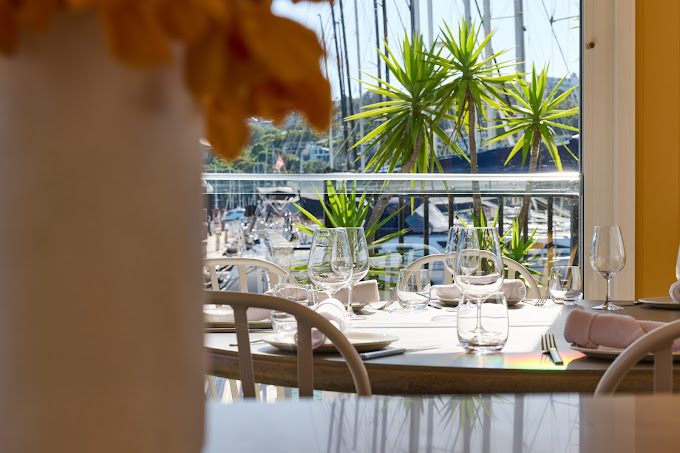
St Siandra is a Mediterranean restaurant perched on a private beach at Mosman’s The Spit, where crystal-clear turquoise waters and luxury yachts create an enchanting backdrop for every meal.
This sunny waterfront venue has mastered the art of transporting diners to the Amalfi Coast, offering an escape where every day feels like a holiday.
Meet The Team
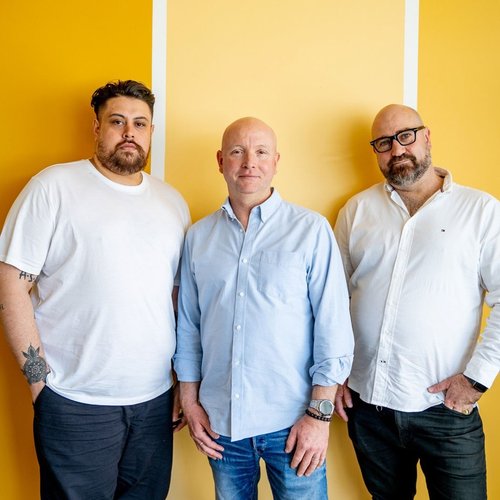
Left to right: Sam McCallum, Gavin Gray, Mitch Davis (Photo credit: stsiandra.com)
The restaurant was established in 2023 by Great Eats Co duo Mitch Davis and Gavin Gray in partnership with ProjectPlus’ Andrew Phelan. For Phelan, who heads Sydney construction company ProjectPlus, and Gray, the venture is a culmination of a 35-year friendship that began in their school days.
Photo credit: St Siandra/Google Maps
While Davis and Gray have helmed dozens of kitchens and restaurants both in Australia and overseas, St Siandra holds special significance as their first standalone venue.
The name itself carries a piece of Sydney’s maritime history – St Siandra No.46 was one of the harbour city’s most celebrated yachts, famous for achieving a remarkable Sydney to Hobart Yacht Race double in the 1950s and 1960s, among numerous other accolades.
Mediterranean Magic on a Plate
Photo credit: St Siandra/Google Maps
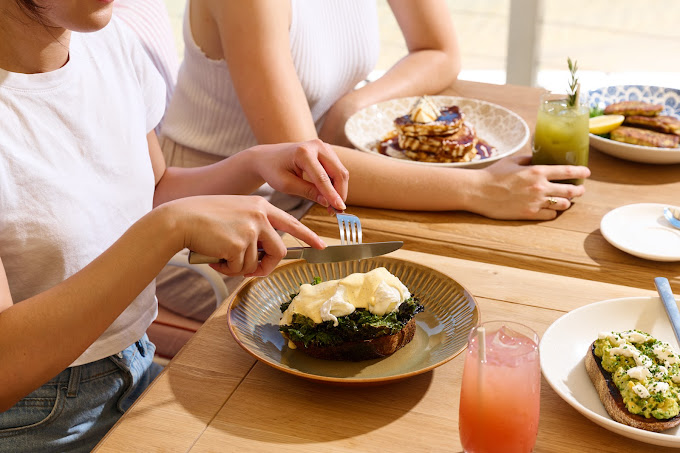
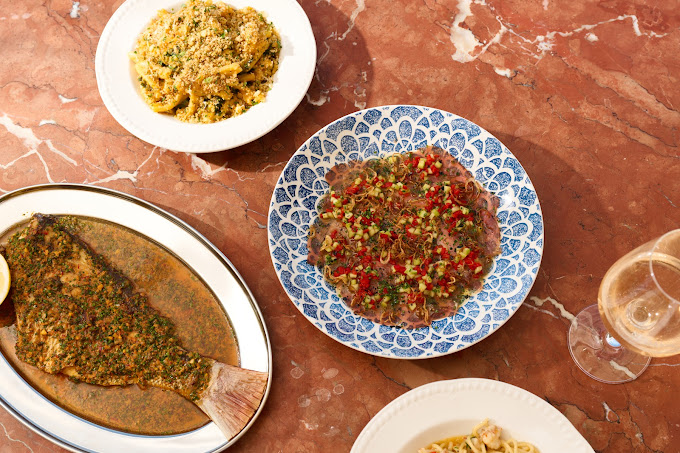
Under the guidance of Head Chef Sam McCallum, the kitchen celebrates locally sourced seafood and seasonal produce, infusing Mediterranean and Middle Eastern flavours into every dish. Standout offerings include their signature potato flatbread, creamy burrata, and succulent lamb shoulder, each complemented by an innovative cocktail menu designed to enhance the coastal dining experience.
For those seeking a comprehensive taste of St Siandra’s culinary prowess, the group dining menu offers a carefully curated journey through their kitchen’s specialties, featuring a generous selection of starters, mains, sides, and desserts. The outdoor seating area provides the perfect setting to sail through a bottle of bubbles while soaking in the waterfront atmosphere.
Photo credit: St Siandra/Google Maps
St Siandra welcomes guests for lunch Wednesday to Sunday and dinner Thursday to Sunday, with their takeaway kiosk offering breakfast, brunch, and light bites for those seeking a casual seaside repast. As both a restaurant and events venue, it has quickly established itself as a premier destination for those seeking a Mediterranean escape without leaving Sydney’s shores.
Here, against the backdrop of one of Sydney’s most prestigious waterfront locations, St Siandra has created more than just a dining destination – it’s a coastal sanctuary where Mediterranean warmth meets Sydney’s maritime charm, serving up an experience that feels like a permanent vacation on the shores of Mosman.
Olympic bronze medallist Rowena Meredith is charting an extraordinary course both on and off the water. At 29, this Australian representative rower is not only a key member of the Women’s Quadruple Sculls team but is also pursuing a career as a paramedic, setting her apart in the world of professional athletics.
Meredith’s rowing career began in 2008 at Mosman Rowing Club. Her breakthrough came with a silver medal at the 2015 U23 World Championships, marking her entry into international competition. Since then, has achieved multiple podium finishes in World Rowing Cups, sixth place at the 2022 World Rowing Championships in Racice, and a bronze medal at the Tokyo 2020 Olympics.
The Tokyo Olympics provided a defining moment in Meredith’s career. Despite facing stiff competition and securing their final berth through the repêchage, Meredith and her crew demonstrated remarkable resilience to clinch the bronze medal in the Women’s Quadruple Sculls.
Paramedic Aspirations
While excelling in rowing, Meredith is simultaneously pursuing a career as a paramedic. This unusual combination demonstrates her commitment to both personal growth and public service. Meredith’s ability to juggle these two intense pursuits provides her with a unique perspective on both her sport and her future career.
A 2-year-old girl underwent surgery after a kookaburra unexpectedly attacked her, tearing a hole in her lip during a family picnic at Georges Heights in Mosman.
The incident occurred around midday when Jessica Bregenhoj and her daughter Paris were enjoying lunch in a popular beachside park shortly after Paris had attended a ballet lesson. The toddler was eating a pastry when a kookaburra swooped down and snatched it directly from her mouth, causing significant injury.
Jessica quickly administered first aid with the help of a passerby who assisted in cleaning the wound with saline.
The severity of the injury led to Paris being rushed to Royal North Shore Hospital, where initial assessments by doctors suggested that stitches were necessary. Concerns regarding the depth of the cut resulted in the involvement of a plastic surgery team, who confirmed that the injury had penetrated through to Paris’s gums.
Despite the ordeal, Paris is recovering well and has been engaging in activities like colouring and playing with her family at home following her discharge from the hospital. Jessica expressed relief that her daughter wasn’t more seriously injured and emphasised the importance of remaining vigilant when eating outdoors.
Photo Credit: Unsplash
Following the incident, Jessica has advocated for installing warning signs in the area to alert others to the potential dangers of local wildlife. The Harbour Trust, which manages Georges Heights, has acknowledged the incident and plans to erect signs around food and beverage areas to educate the community on how to coexist with the native birds safely.
Moreover, other local residents have shared similar experiences, highlighting a recurring issue with kookaburras behaving aggressively when food is present.
The National Parks and Wildlife Service (NPWS) reiterated the importance of not feeding wildlife and encouraged anyone who experiences aggressive bird interactions to report them to the appropriate authorities. They also provided guidelines on how to react safely if swooped by a bird.
More than 18,000 motorists in Mosman and North Sydney have had a demerit point removed from their driving records, reflecting a broader effort across NSW to incentivise good road behaviour.
Mosman, with a total of 25,938 licensed drivers, saw 8,145 individuals with current demerit points, of which 4,977 qualified for this reduction. In North Sydney, from 76,020 licensed holders, 20,535 had demerit points with 13,069 meeting the criteria for removal.
This local focus forms part of a state-wide program that erased points for over one million drivers, aiming to reinforce safe driving practices amidst increasing road fatalities.
The initiative also significantly benefited drivers in the Central Coast area, where 54,971 motorists saw a point deducted from their records. Additionally, car-dependent regions like Western Sydney witnessed substantial participation with 290,287 demerit points collectively removed across several LGAs including Blacktown, Canterbury-Bankstown, Cumberland, Liverpool, and Parramatta.
With NSW facing a crisis of 369 road deaths in the last year, the government’s program targets a broader reduction in fatalities by encouraging adherence to traffic regulations. The demerit point removal, typically a process that spans three years, has been accelerated for those maintaining a clean driving slate from January 17, 2023, to January 17, 2024, as part of a strategic approach to enhance road safety.
Photo Credit: Freerangestock.com
“The reward of a demerit point removed is most valuable in areas where people depend on their car to get to work and to get their families around like in western Sydney, the Central Coast and our regional areas,” Minister for Roads John Graham said.
“If you drive for a living then the reward for safe driving could be the difference between ongoing employment and losing your livelihood.
The ongoing efforts to promote safer driving behaviour continue with plans to extend the demerit point return trial and implement additional safety measures such as seatbelt enforcement via mobile detection cameras. These initiatives represent a crucial step towards reducing the road toll and ensuring safer travel for all NSW residents.
Mosman teen Felix Pal is set to make waves on the international stage, juggling HSC studies with a once-in-a-lifetime opportunity to represent Australia at the World Water Polo Championships in July.
Most Year 12 students already have their hands full with impending HSC exams, but one Mosman teen has the added pressure of wearing the Green and Gold this July. The 17-year-old Scots College student will represent the nation in the Under 18 Australian men’s water polo team at this year’s world championships in Argentina.
Despite not initially being heavily involved in the national selection process, Felix recently received the surprising news that he had been chosen to represent Australia in the Under 18 men’s water polo team at the upcoming World Championships. This unexpected opportunity has left the Mosman teen excited and eager to participate in the prestigious event.
Water Polo runs deep in the Pal family. Felix’s late grandfather played in Hungary. Additionally, Felix’s father had a remarkable water polo career, winning three national championships while playing for the University of California, Berkeley in the United States. Felix has always aspired to match his father’s success and continue the water polo tradition deeply rooted in their family history.
The third generation is about to make waves on the international stage. Felix attributes his talent and passion for the sport to his older brother George, who he considers a skilled water polo player.
But before the young gun can make the trip, he must first raise money. Unfortunately, Australia doesn’t fund their junior teams, and with an estimated cost of $16,000 for each player, Felix’s dad, Damon, is calling on the community for help.
While Damon acknowledges the honour of having his son represent Australia on the international stage, he laments the lack of funding from national programs to support the junior water polo team. Recognising the significant financial burden this opportunity presents, Damon is actively seeking assistance from various sources, expressing gratitude for any contributions that can help alleviate the substantial costs associated with Felix’s participation in the World Championships.
So far, almost $3,500 has been raised – but there’s still a long way to go.
Olympic Dreams
While Felix harbours ambitions of potentially reaching the Olympic level in water polo, he remains grounded and pragmatic about his chances, expressing reserved confidence tempered by realistic expectations.
Despite not wanting to get ahead of himself, he remains hopeful and committed to pursuing his athletic dreams as far as his talents can take him. However, he must first overcome his academics.
After competing in the prestigious World Championships, Felix Pal must immediately shift his focus to preparing for the critical HSC Trial Exams. Juggling the demands of his academic commitments alongside his athletic pursuits will undoubtedly be a formidable task, but he believes the opportunity to represent Australia on the international stage makes the effort worthwhile.
With a single stroke of entrepreneurial daring that defied the odds, Scottish immigrant Archibald Mosman amassed a whaling empire along Sydney’s Great Sirius Cove, only to lose it all in a dramatic downfall less than two decades later.
From humble beginnings as a merchant arriving in Sydney aboard the Civilian in 1828, Mosman swiftly diversified his business interests, establishing warehouses and securing lucrative wool trade connections with Liverpool. However, his ambitions soon shifted towards the burgeoning whaling industry.
Seizing an opportunity, Mosman outmaneuvered his competitor John Bell, acquiring the rights to develop a whaling depot along the picturesque Sirius Cove. By 1835, his fleet boasted the formidable Jane and Tigress whalers, solidifying his dominance in the region.
Sirius Cove Photo Credit: Mosman Council Image Library
The Opulent Nest and a Growing Legacy
Revelling in his success, Mosman constructed the opulent The Nest residence in the 1830s. The house was a grand estate overlooking his maritime domain. It was originally situated on 30 acres of land overlooking Mosman Bay, with an orchard, vineyard, gardens, and other features making it an idyllic home. The thick walls suggest it was built with convict labour and designed to withstand potential attacks from convicts working there.
Mosman’s son Hugh, who discovered the Charters Towers goldfield, was born at The Nest. Over the decades, it was home to several notable families like the Stirlings, Judge Forbes, and the Russells. After 90 years, The Nest was demolished as the grounds were being subdivided for development.
Mosman’s whaling operations became an economic powerhouse, generating substantial profits from berthing, careening, and refitting services. His land acquisitions led to the surrounding suburb being named after him, solidifying his legacy in the region. The suburb of Mosman, derived from his surname, became a lasting tribute to the Scottish entrepreneur’s impact on the region’s development.
However, his meteoric rise was subject to controversy. The whaling industry’s exploitation of these magnificent creatures for their oil and other products casts a shadow over Mosman’s legacy, reflecting the extractive mindset of the era.
Photo Credit: Wikimedia Commons
The Tycoon’s Downfall & Rebuilding
In an ironic twist, the very empire Mosman had so painstakingly built crumbled in 1844 when he and his business partners faced bankruptcy. Forced to relinquish his annuity and whaling establishment, Mosman retreated to the pastoral pursuits of Furracabad station near Glen Innes.
This dramatic downfall, however, was not the end of Mosman’s story. Despite losing his whaling ventures, he rebuilt his fortunes, eventually relocating to the affluent Byron Lodge in Randwick, where he spent his final years.
Today, the former Mosman Whaling Station is now the Mosman Scouts Hall, also known as The Barn, a heritage listed site. It is a poignant reminder of the region’s whaling heritage and one of the last remaining examples of early colonial maritime industrial architecture in Sydney. Though the harpoons have long fallen silent, the echoes of Mosman’s whaling empire still reverberate through the annals of Australia’s history.
The Barn in Mosman Photo Credit: Wikimedia Commons
Moreover, the Mosman family remains a proud custodian of their ancestor’s legacy, fiercely guarding the proper pronunciation of the suburb’s name, as “Moss-man” and not “Mozz-min.” This pronunciation debate has swirled around Mosman for years, with the family weighing in to defend the proud heritage of the Mosman name.
According to Susan Stewart, a descendant, referring to the suburb as “Mozz-min” is an absolute pretentious act, typically done by the nouveau riche. She argues that newcomers to Mosman need to understand that the name Mosman has a long history spanning generations. Stewart believes that only those oblivious to the area’s heritage would mispronounce the name in such a way.
Indeed, the Mosman family tree stretches back to 1828, when Archibald Mosman and his twin brother George arrived in Australia from Scotland. They later established the whaling station that gave the suburb its name. Today, descendants bearing the Mosman surname or middle name are scattered throughout the area, their roots inextricably intertwined with the region’s history.
While the story of Archibald Mosman is one of triumph, tragedy, and transformation, his family’s unwavering pride in their ancestry ensures that his legacy endures, showing the indomitable spirit of entrepreneurship and the indelible imprint left by those who dared to dream big in the unforgiving wilderness of colonial Australia.
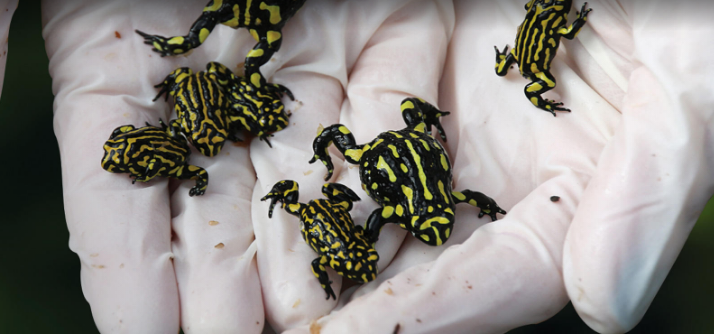
A purpose-built amphibian and reptile conservation centre is being set up at the Taronga Zoo in Mosman to serve as home to some of Australia’s unique and critically endangered species, such as the Bellinger River Snapping Turtle and the Corroboree Frog.It is expected to be fully operational within 2022.
This comes after the NSW Government approved of the facility, which will replace the existing Reptile World exhibit.
The exhibit, quite popular among locals, will be demolished to make way for a new on-site Wildlife Hospital.
Artist’s impression of Amphibian and Reptile Conservation Centre (Photo credit: NSW Government)
The Taronga Conservation Society said it will be an educational and multi-layered experience for guests that showcases the beauty and diversity of some of the most misunderstood and most imperilled creatures on the planet under threat, from climate change, disease and habitat modification.
“Taronga is a leader in reptile and amphibian conservation in Australia. We have brought back seven reptile and amphibian species from the brink of extinction,” the group stated.
This includes the Bellinger River Snapping Turtle, a short-necked freshwater turtle often found in the deeper pools of rivers. They are considered critically endangered or are facing an extremely high risk of extinction in the wild.
Minister for Planning and Homes, Anthony Roberts expects that the new conservation centre at the Taronga Zoo will be a drawcard for tourists and locals.
“Taronga is such an important part of Sydney, not only in its role of providing care for more than 4,000 animals but also in being an amazing place for the public to explore and learn about the natural world,” Mr Roberts said.
“It will bring guests eye to eye with unbelievable animals, help spark a connection and inspire action for years to come.”
The new purpose-built facility is designed by DWP (Design Worldwide Partnership) with landscape architecture by Context Landscape Architecture.